Electrical safety and system reliability are critical in residential, commercial, and industrial environments. From power plants and factories to office buildings and data centers, electrical systems must operate safely and efficiently to prevent failures, downtime, and hazards. One of the most important aspects of electrical safety is ensuring that insulation remains intact and effective. This is where insulation testing plays a vital role.
In this article, we will explain what an insulation resistance tester is, why insulation resistance testing is essential, how the device works, and where it is commonly used. By the end, you will have a clear understanding of how insulation testing helps protect equipment, people, and operations.
Understanding Electrical Insulation
Electrical insulation is a non-conductive material used to prevent current from flowing where it should not. It surrounds conductors such as wires, cables, motor windings, and transformers. Common insulation materials include rubber, PVC, varnish, polyethylene, and epoxy resins.
Over time, insulation can deteriorate due to:
- Heat and thermal cycling
- Moisture and humidity
- Mechanical stress and vibration
- Chemical exposure
- Aging and environmental conditions
When insulation weakens, current leakage may occur. This leakage can lead to electric shock, short circuits, equipment damage, or even fire. Therefore, testing insulation condition is a preventive measure rather than a reactive one.
What Is an Insulation Resistance Tester?
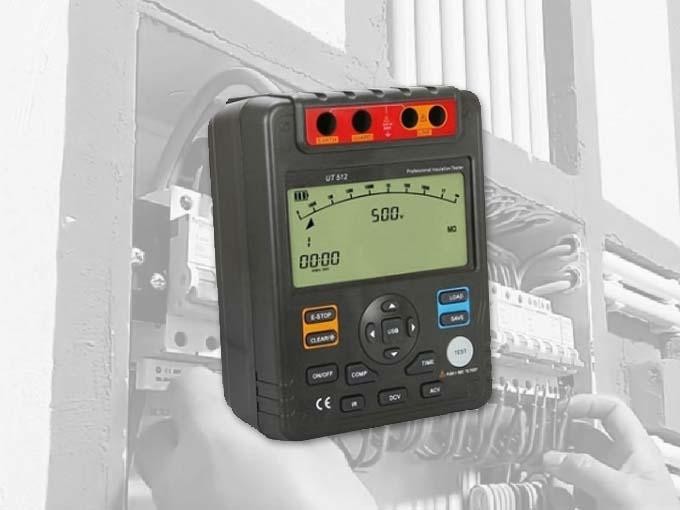
An insulation resistance tester is a specialized electrical instrument designed to measure the resistance offered by insulation materials to electrical current. Unlike a standard multimeter, this device applies a high DC voltage to the insulation and measures how much current leaks through it.
The higher the resistance value, the better the insulation quality. Low resistance values usually indicate moisture ingress, contamination, insulation breakdown, or aging.
These insulation resistance testers are often referred to as “megohmmeters” because insulation resistance is measured in megaohms (MΩ) or gigaohms (GΩ).
Why Insulation Resistance Testing Is Important
Insulation resistance testing is a key component of electrical safety and maintenance programs. It helps identify problems early, before they result in system failure or accidents.
Key benefits include:
- Improved safety by reducing the risk of electric shock
- Prevention of equipment damage caused by leakage currents
- Reduced downtime through early fault detection
- Compliance with electrical standards and regulations
- Extended lifespan of electrical assets
Routine insulation testing is commonly required during installation, commissioning, scheduled maintenance, and after repairs.
How Does an Insulation Resistance Tester Work?
The working principle of an insulation resistance tester is straightforward but highly effective. The device generates a controlled high DC voltage and applies it between two points—typically a conductor and ground.
Here is how the process works step by step:
1. Application of DC Test Voltage
The tester applies a DC voltage that is much higher than normal operating voltage. Common test voltages include 250V, 500V, 1000V, 2500V, and 5000V, depending on the equipment being tested.
2. Measurement of Leakage Current
When the voltage is applied, a small amount of current may flow through the insulation. This is known as leakage current and is expected to be minimal if the insulation is in good condition.
3. Calculation of Resistance
Using Ohm’s Law (Resistance = Voltage ÷ Current), the instrument calculates the insulation resistance value. A high resistance reading indicates healthy insulation, while a low reading suggests deterioration.
4. Stabilization and Time Factor
Insulation resistance readings typically increase over time as the insulation charges. Many tests are conducted over 30 seconds to 1 minute to observe stability and accuracy.
Typical Insulation Resistance Values
While acceptable values vary depending on standards, voltage levels, and equipment type, general guidelines include:
- Above 1 GΩ – Excellent insulation
- 100 MΩ to 1 GΩ – Good condition
- 10 MΩ to 100 MΩ – Marginal, monitor closely
- Below 10 MΩ – Poor insulation, corrective action required
It is important to compare readings against manufacturer recommendations and industry standards rather than relying solely on generic values.
Common Applications of Insulation Resistance Testing
Insulation resistance testing is widely used across various industries and systems.
Electrical Motors and Generators
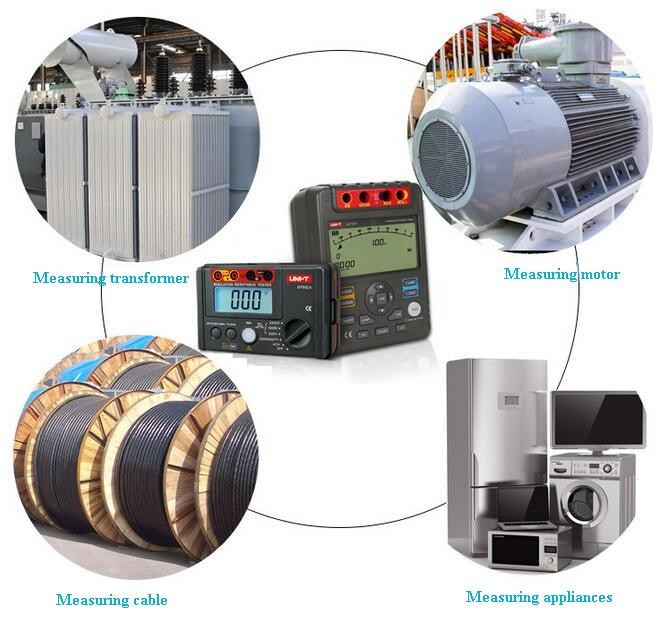
Motor windings are exposed to heat, vibration, and moisture. Regular testing helps detect insulation degradation before winding failure occurs.
Power Cables and Wiring
Using a megger insulation tester 2500V to test cables ensures that insulation has not been compromised due to mechanical damage or environmental exposure.
Transformers
Transformer insulation health is critical for safe and efficient operation. Insulation testing helps identify internal moisture or contamination.
Switchgear and Control Panels
Insulation testing verifies that electrical clearances and insulation barriers remain effective.
Renewable Energy Systems
Solar PV installations and wind turbines rely on insulation testing to ensure safety and system reliability.
Types of Insulation Resistance Testers
Different testing needs require different tester configurations.
Handheld Testers
Compact and portable, these are ideal for field technicians and routine maintenance tasks.
Digital Testers
Offer accurate readings, data storage, and advanced features such as polarization index and dielectric absorption ratio.
Analog Testers
Traditional models with needle displays are still used in some applications for their durability and simplicity.
Advanced Diagnostic Testers
Used in industrial environments, these testers provide trend analysis and detailed diagnostics for large assets.
Safety Considerations During Testing
Because insulation resistance testing involves high voltages, safety precautions are essential.
- Always disconnect equipment from power before testing
- Discharge capacitors and stored energy
- Use appropriate personal protective equipment (PPE)
- Never touch test leads during operation
- Allow sufficient discharge time after testing
Following proper safety procedures ensures accurate results and protects personnel.
Standards and Guidelines
Insulation resistance testing is governed by international and regional standards, including:
- IEC standards for electrical testing
- IEEE recommendations for rotating machinery
- National electrical codes and safety regulations
Adhering to these standards ensures consistency, reliability, and compliance.
Conclusion
An insulation resistance tester is an essential diagnostic tool that helps assess the condition of electrical insulation across a wide range of applications. By applying a controlled high voltage and measuring leakage current, it provides valuable insight into insulation health, enabling preventive maintenance and improved safety.
Understanding how insulation resistance testing works empowers engineers, technicians, and facility managers to make informed decisions, reduce risk, and maintain system reliability. Regular testing not only protects equipment but also safeguards lives and operations, making it a cornerstone of modern electrical maintenance practices.