Concrete is one of the most widely used construction materials in the world, and its compressive strength is a key indicator of structural performance and safety. Engineers, contractors, and inspectors must ensure that concrete meets design specifications without causing unnecessary damage to structures. This is where non-destructive testing (NDT) methods play a critical role.
One of the most popular and practical NDT tools for assessing concrete strength is the rebound hammer. This method allows professionals to estimate compressive strength quickly, cost-effectively, and without altering the integrity of the structure. In this article, we will explore how a rebound hammer works, how to perform the test correctly, factors affecting accuracy, and best practices for reliable results.
Understanding Concrete Compressive Strength
Compressive strength refers to the ability of concrete to withstand axial loads that tend to compress it. It is usually expressed in megapascals (MPa) or pounds per square inch (psi). Traditionally, compressive strength is determined by crushing concrete cubes or cylinders in a laboratory. While this method is accurate, it is destructive, time-consuming, and not always practical for existing structures.
Non-destructive methods, such as rebound hammer testers, offer an alternative by providing an estimated strength value based on surface hardness. Although it does not replace laboratory testing entirely, it is extremely useful for quality control, condition assessment, and comparative analysis.
What Is a Rebound Hammer Test?
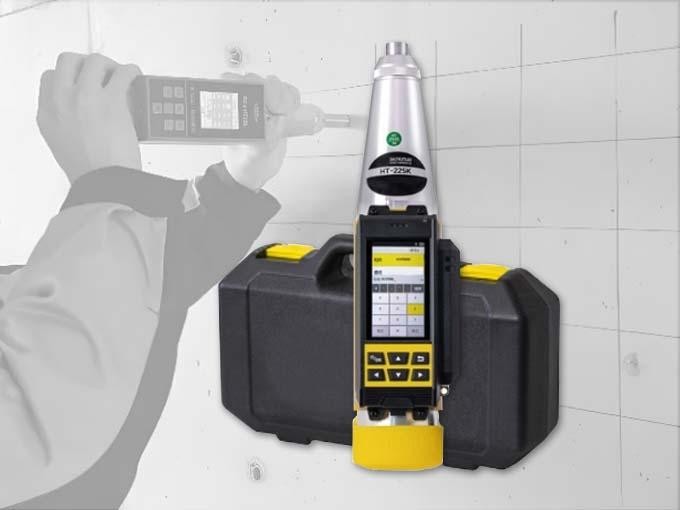
The rebound hammer test is a surface hardness test used to evaluate the quality and uniformity of concrete. The device consists of a spring-loaded mass that impacts the concrete surface. The distance the mass rebounds after impact is measured and expressed as a rebound number.
This rebound number is then correlated with compressive strength using calibration charts or curves. The test is quick, portable, and suitable for both new and existing concrete structures.
How Rebound Hammer Works
The principle behind the rebound hammer is simple: harder concrete surfaces produce higher rebound values, while weaker or deteriorated concrete produces lower rebound values.
When the hammer strikes the concrete surface:
- The plunger impacts the surface with a standardized energy.
- The mass rebounds depending on surface hardness.
- The rebound distance is measured on a graduated scale.
- The rebound number is recorded and analyzed.
Using established correlations, this rebound number provides an estimate of compressive strength.
Equipment Required for Testing
To conduct the test properly, the following equipment is needed:
- A calibrated rebound hammer
- Grinding stone or abrasive pad
- Measuring tape or chalk for marking test points
- Data recording sheet
- Manufacturer’s calibration chart or strength conversion curve
Proper calibration and equipment conditions are essential for reliable measurements.
Step-by-Step Procedure to Measure Concrete Strength
1. Surface Preparation
Ensure that the concrete surface is clean, dry, and smooth. Remove dust, paint, plaster, loose particles, or coatings. If the surface is rough, lightly grind it to create a uniform testing area.
2. Selection of Test Area
Choose a representative area of the structure. Avoid edges, honeycombed zones, visible cracks, or areas with embedded reinforcement close to the surface. The test area should be large enough to take multiple readings.
3. Marking Test Points
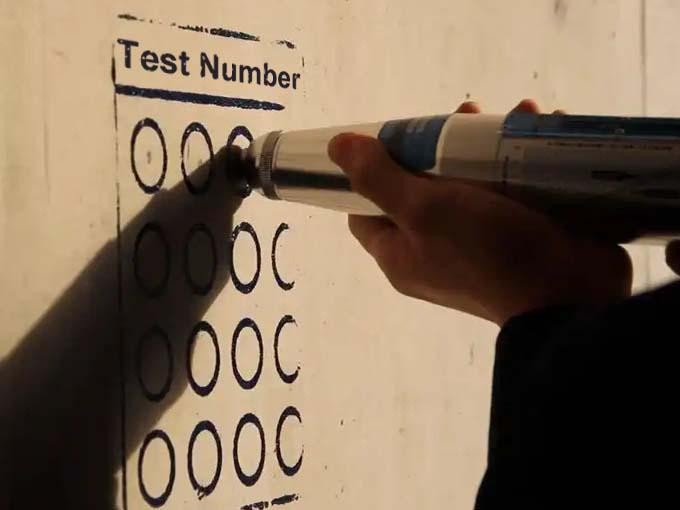
Mark at least 10 to 12 test points spaced evenly, typically not less than 25 mm apart. Multiple readings help reduce variability and improve accuracy.
4. Positioning the Hammer
Hold the Schmidt rebound hammer tester perpendicular to the test surface. The orientation (horizontal, vertical upward, or vertical downward) affects results, so note the testing direction.
5. Performing the Impact
Press the hammer firmly against the surface until it triggers the impact. Ensure steady pressure and avoid jerky movements.
6. Recording the Rebound Number
Read the rebound value from the scale immediately after impact and record it. Repeat the process for all marked points.
7. Calculating the Average
Discard any readings that deviate significantly from the rest. Calculate the average rebound number from the remaining values.
8. Estimating Compressive Strength
Use the appropriate conversion chart to correlate the average rebound number with compressive strength, considering the hammer orientation and concrete age.
Factors Affecting Test Results
Rebound hammer results can be influenced by several factors. Understanding these variables helps improve reliability and interpretation.
Concrete Age
Younger concrete may show lower rebound values even if it is sound. Strength increases with curing time, especially in the first 28 days.
Surface Condition
Carbonated or hardened surfaces can produce higher rebound numbers, leading to overestimation of strength.
Moisture Content
Wet concrete surfaces generally give lower rebound values compared to dry surfaces.
Aggregate Type
Concrete made with harder aggregates will yield higher rebound readings than concrete with softer aggregates.
Testing Direction
Vertical and horizontal testing orientations affect the rebound value due to gravity’s influence on the hammer mechanism.
Accuracy and Limitations
Rebound hammer provides an estimate rather than an exact measurement of compressive strength. It is best used for:
- Comparing different areas of the same structure
- Identifying weak or deteriorated zones
- Monitoring uniformity and quality control
However, it should not be used as the sole method for determining structural capacity. For critical assessments, rebound hammer should be combined with core sampling or other non-destructive methods.
Standards and Guidelines
Rebound hammer is governed by recognized international standards, including:
- ASTM C805
- BS EN 12504-2
- IS 13311 (Part 2)
These standards outline procedures, interpretation methods, and limitations to ensure consistency and reliability.
Practical Applications in Construction
The rebound hammer is widely used in:
- Quality control of newly cast concrete
- Evaluation of existing buildings and bridges
- Preliminary structural assessments
- Post-fire or damage investigations
- Maintenance planning and asset management
Its portability and speed make it ideal for on-site testing.
Best Practices for Reliable Results
To improve accuracy and consistency:
- Always calibrate the hammer before use
- Take multiple readings and average them
- Avoid testing near reinforcement bars
- Use standard conversion charts
- Combine results with visual inspection and other tests
Following these practices ensures meaningful and defensible results.
Conclusion
Using rebound hammers to measure concrete compressive strength is a practical and efficient approach for non-destructive evaluation. By understanding the testing procedure, influencing factors, and limitations, professionals can make informed decisions about concrete quality and structural condition.
While rebound hammers do not replace laboratory testing, they are invaluable for rapid assessments, comparative analysis, and preventive maintenance. When used correctly and in accordance with standards, they provide a reliable snapshot of concrete performance, helping engineers and inspectors maintain safety, durability, and confidence in construction projects.