In a move that caught Wall Street's aggressive easing bulls off guard, the Federal Reserve maintained its benchmark interest rate at 3.5% to 3.75% during its January 2026 meeting, signaling a stark departure from the rapid-fire cuts seen in late 2025. Federal Reserve Chair Jerome Powell, in one of his final acts before his term concludes this May, delivered a resolute message to the markets: the central bank intends to cut rates only once more for the entirety of 2026, pivoting to a "watchful neutral" stance as goods-sector inflation remains stubbornly high.
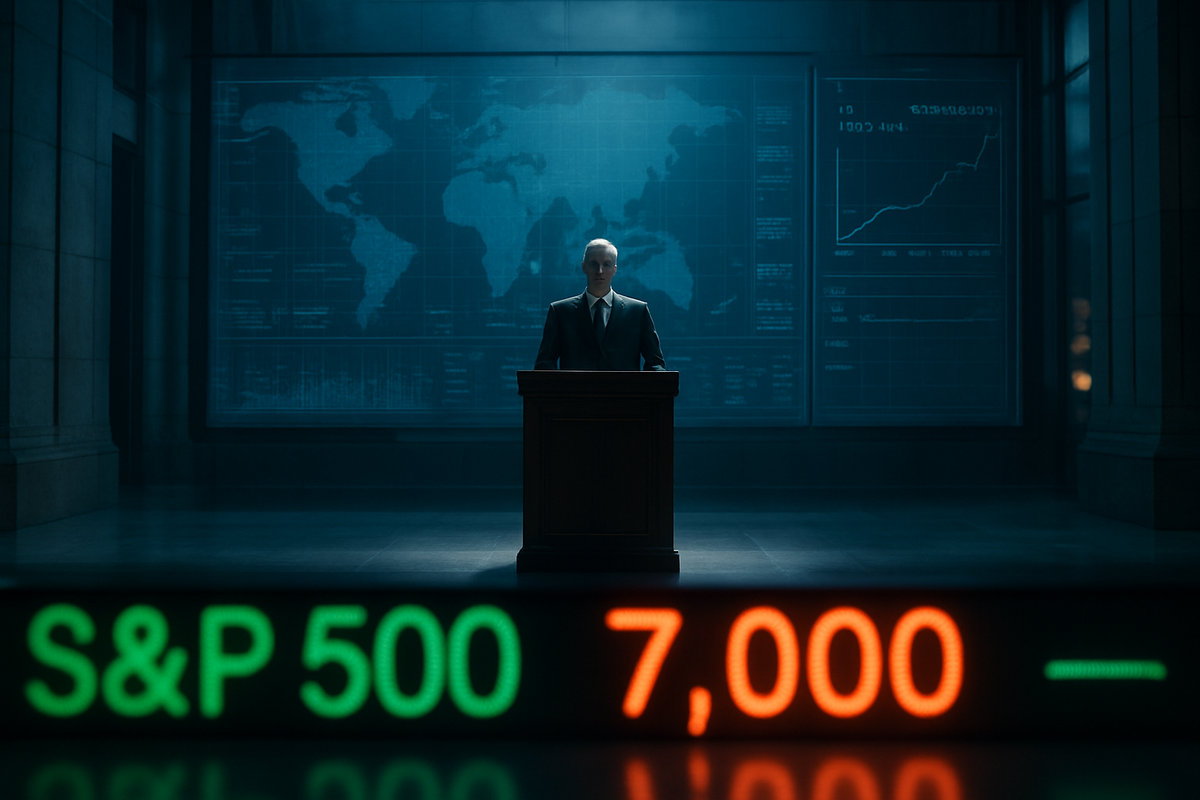
The immediate implications were felt across the capital markets. While the S&P 500 reached a historic milestone by crossing the 7,000 mark for the first time, fueled by a relentless artificial intelligence boom, the broader market indices showed significant divergence. Bond yields remained elevated as traders recalibrated their models, realizing that the era of "cheap money" is not returning as quickly as many had speculated. This hawkish pause marks a critical juncture in the Fed's battle against inflation, which has been complicated by recent tariff adjustments and a labor market that refuses to buckle under the weight of higher rates.
A "Neutral" Pause Amidst a Divided Committee
The Federal Open Market Committee (FOMC) concluded its two-day meeting on January 28, 2026, with a 10–2 vote to hold the federal funds rate steady. This decision follows a trio of 25-basis-point cuts in the final quarter of 2025, which had led many investors to believe a full-scale easing cycle was underway. However, the January dissenters—Governors Stephen Miran and Christopher Waller—voted for an immediate cut, highlighting a growing rift within the Fed's leadership. Waller’s dissent, in particular, has been scrutinized by political analysts as a potential positioning move for the Chairmanship once Powell steps down.
During his press conference, Powell characterized the U.S. economy as being on "firm footing," noting that current policy is now within the "range of plausible estimates of neutral." The Chair pointed to the "one and done" signal for 2026, a projection originally whispered in the December dot plots and now firmly cemented as the baseline. This policy shift is largely driven by a stabilizing unemployment rate of 4.4% and a Core PCE inflation rate that has stalled near 3.0%, partially due to the pass-through effects of higher tariffs on imported goods.
The market reaction was a study in contrasts. The tech-heavy Nasdaq Composite rose 0.9%, buoyed by the continued dominance of mega-cap technology firms. Conversely, the Dow Jones Industrial Average fell 0.8%, or approximately 409 points. Much of the blue-chip index's decline was attributed to a nearly 20% slide in UnitedHealth Group (NYSE: UNH), which faced idiosyncratic regulatory hurdles that overshadowed the Fed’s macroeconomic messaging. Bond markets remained "vigilant but calm," with the 10-year Treasury yield edging higher to settle in the 4.24%–4.27% range.
Corporate Divergence: Winners in Tech, Losers in Finance
The Fed's "higher-for-longer" (or perhaps "neutral-for-longer") stance has created a clear divide between sectors. The primary winners of this environment continue to be the AI infrastructure giants. Nvidia (Nasdaq:NVDA) and Microsoft (Nasdaq:MSFT) saw their shares rise as the Fed's assessment of economic resilience suggests that corporate spending on digital transformation will not be derailed by 3.5% interest rates. Similarly, Meta Platforms (Nasdaq:META) and Tesla (Nasdaq:TSLA) posted gains of 10% and 4% respectively in the days following the meeting, as investors favored growth stocks with strong balance sheets that can self-fund expansion.
Retail giant Walmart (NYSE: WMT) also emerged as a winner, with shares hitting an all-time high of $121.63. The company has successfully leveraged the stable interest rate environment to fund a massive expansion into healthcare and high-margin services. Analysts suggest that Walmart's ability to manage labor costs—recently raising pharmacy technician wages to $28 per hour—while maintaining consumer demand makes it a primary "safe haven" for investors wary of the Fed’s hawkish lean.
On the losing side, the banking sector has struggled to maintain momentum. Despite the 3.5% floor theoretically aiding net interest margins, JPMorgan Chase (NYSE: JPM) and Bank of America (NYSE: BAC) have both seen their stock prices tumble year-to-date. JPMorgan shares were down over 6% in January, as CEO Jamie Dimon warned that "regulatory and idiosyncratic risks" were beginning to outweigh the benefits of stable lending spreads. Furthermore, the interest-rate-sensitive real estate and utilities sectors have faced continued pressure, as the prospect of only one rate cut in 2026 delays any significant relief for capital-intensive industries.
Inflation, Tariffs, and the Question of Independence
The Fed's decision to maintain rates at 3.5%–3.75% fits into a broader global trend of "sticky" inflation. Unlike the supply-chain-driven inflation of 2021-2022, the current 2026 inflationary pressures are being fueled by a resurgence in goods prices, largely linked to recent tariff hikes. This has placed the Fed in a difficult position, as monetary policy is a blunt tool for addressing cost-push inflation driven by trade policy. Historically, this mirrors the "stop-go" cycles of the late 20th century, where central banks struggled to declare total victory over inflation while the underlying economic landscape was shifting.
Adding to the complexity is the intense political pressure currently surrounding the Federal Reserve. With Powell’s term ending in May 2026, the White House has been vocal about its desire for more aggressive rate cuts. Powell’s response during the January presser was a pointed defense of central bank autonomy. When asked for advice for his successor, he offered a succinct five-word maxim: "Stay out of elected politics." This tension has contributed to a record-breaking rally in gold, which surpassed $5,500 per ounce as investors seek a hedge against both inflation and potential political interference with the dollar.
The ripple effects of this hawkish stance extend to international partners. As the Fed signals a slower path to easing, the U.S. dollar has remained relatively strong, putting pressure on emerging markets that carry dollar-denominated debt. This "neutral" stance in the U.S. effectively forces other central banks to maintain higher rates than they might otherwise prefer, to prevent significant currency depreciation.
The Road Ahead: The Transition to a New Fed Era
As the market looks toward the second half of 2026, the primary focus will shift from the current FOMC decisions to the selection of Powell's successor. The "one cut" guidance serves as a roadmap for the incoming Chair, suggesting that the committee expects the neutral rate to be higher than in the pre-pandemic era. Short-term, investors should expect continued volatility in small-cap stocks, represented by the Russell 2000, which fell over 1% following the January meeting as the "one and done" signal dampened hopes for a small-business lending rebound.
Strategically, companies will likely pivot toward "efficiency-first" models. Amazon (Nasdaq:AMZN), which announced 16,000 corporate layoffs on the same day as the Fed meeting, exemplifies this trend. Large-cap firms are no longer waiting for the Fed to bail them out with zero-interest rates; instead, they are aggressively cutting costs and reinvesting in automation and AI to maintain margins. In the coming months, the Fed will be hyper-focused on "goods-sector" data to see if the tariff-induced inflation is transitory or if it will require them to hold rates at 3.5% well into 2027.
Final Assessment: A New Floor for the Global Economy
The Federal Reserve's January 2026 meeting has effectively set the "floor" for the current economic cycle. By signaling only one rate cut for the year and holding at 3.5%–3.75%, the Fed has acknowledged that the era of ultra-low rates is firmly in the rearview mirror. The key takeaway for investors is that economic resilience—not Fed intervention—will be the primary driver of market returns in 2026.
Moving forward, the market will be characterized by extreme sector dispersion. While the S&P 500's breach of 7,000 is a testament to the power of the AI revolution, the struggles of the Dow and the banking sector suggest that "normalization" is a painful process for many traditional industries. Investors should watch the upcoming labor reports and the May leadership transition with a keen eye. The lasting impact of Powell's tenure will be defined by whether this "hawkish hold" successfully anchors inflation without tipping a resilient, if divided, economy into a late-cycle recession.
This content is intended for informational purposes only and is not financial advice.