As the financial world settles into the first weeks of 2026, all eyes are on United Airlines (Nasdaq: UAL) as it sets the tone for the travel and leisure sector. Following a year defined by extreme volatility—ranging from record-breaking summer international demand to a paralyzing 43-day federal government shutdown in late 2025—United’s latest financial disclosures are being scrutinized as a roadmap for the year ahead. With a fresh bipartisan funding agreement currently hanging in the balance in Washington, the airline’s ability to maintain its "premiumization" strategy is emerging as the ultimate litmus test for the industry’s resilience.
The immediate implications for United are twofold: validating the massive capital expenditures made in its "United Next" growth plan and proving that the carrier can outrun the operational fragility of the U.S. aviation system. As of January 21, 2026, United has positioned itself as the aggressive leader of the "Big Three" legacy carriers, reporting fourth-quarter results that suggest a "goldilocks" environment for travel—high demand paired with stabilizing fuel costs—provided that political instability does not once again ground the nation’s air traffic control (ATC) network.
A Record Q4 Beat Amidst Political Turbulence
United Airlines officially reported its fourth-quarter 2025 results on January 20, 2026, posting an adjusted earnings per share (EPS) of $3.10, comfortably surpassing the Wall Street consensus of $2.94. This performance was driven by record quarterly revenue of $15.4 billion, a nearly 5% increase year-over-year. The results are particularly striking given that they include the financial "scar tissue" from the 43-day government shutdown that spanned October and November 2025. That shutdown, the longest in American history, cost United an estimated $250 million in pre-tax earnings due to forced flight reductions and decreased demand for government-related travel.
The timeline leading to this moment has been a grueling test of operational discipline. Throughout the fall of 2025, United was forced to cut approximately 10% of its flight schedule across 40 major airports as the FAA and TSA faced unprecedented staffing shortages. However, unlike previous cycles where such disruptions led to a total collapse in profitability, United leveraged its hub-and-spoke efficiency to protect its most lucrative international and long-haul domestic routes. This strategic pivoting allowed the carrier to end 2025 with a full-year EPS of $10.62, making it the only major U.S. airline to see year-over-year adjusted EPS growth in a year marred by federal funding lapses.
Initial market reactions have been cautiously optimistic. While the earnings beat is undeniable, investors remain hyper-fixated on the "Shutdown Redux" threat looming on January 30, 2026. Although a $1.2 trillion bipartisan funding deal was proposed yesterday, the memories of the October 2025 "operational aftershocks"—including a total freeze on air traffic controller hiring—continue to weigh on the stock’s short-term valuation. Stakeholders, including CEO Scott Kirby and major institutional investors, are now watching to see if the proposed deal can provide a multi-year runway for the industry to finally address its chronic infrastructure deficits.
Winners and Losers in the New Aviation Reality
United Airlines (Nasdaq: UAL) appears to be emerging as the primary "winner" in the current high-yield environment, thanks to its heavy tilt toward premium cabin offerings. Premium revenue for the carrier grew by 9% in the fourth quarter alone, a trend that is increasingly decoupling United’s fortunes from the budget-conscious "low-cost carrier" (LCC) segment. By focusing on the "premiumization" of the flying experience, United is successfully insulating itself from the price wars that have plagued competitors who rely more heavily on domestic "basic economy" traffic.
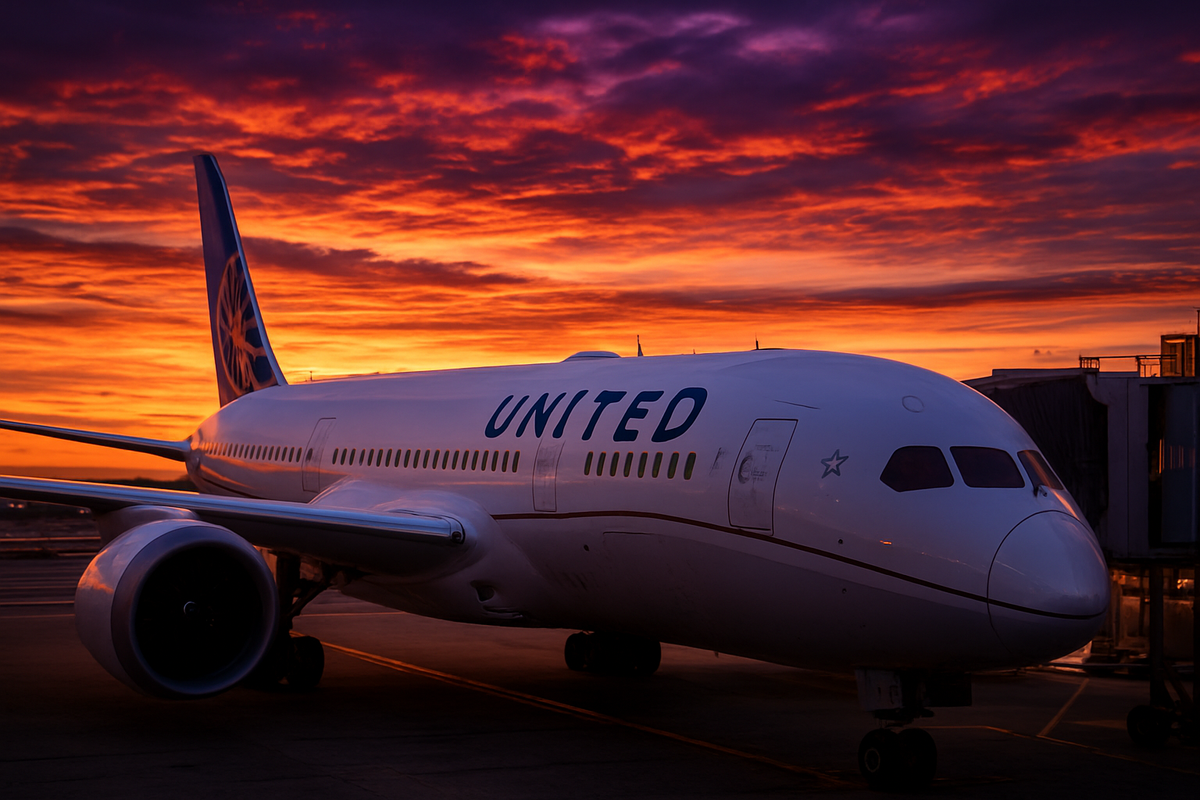
Conversely, Delta Air Lines (NYSE: DAL) remains United's fiercest rival for the top-tier traveler. While Delta has long held the title of the "most profitable" airline, United’s rapid expansion of its widebody fleet—including the delivery of 20 new Boeing (NYSE: BA) 787 Dreamliners scheduled for 2026—is threatening Delta’s dominance in the transatlantic and transpacific markets. Meanwhile, American Airlines (Nasdaq: AAL) continues to struggle with a higher debt load and a more domestic-centric strategy that leaves it more vulnerable to the domestic ATC disruptions and staffing shortages that a government shutdown exacerbates.
The "losers" in this 2026 landscape are increasingly the ultra-low-cost carriers. With the FAA’s hiring of air traffic controllers currently short by 3,800 personnel due to past funding lapses, the government often prioritizes "mainline" traffic at major hubs like Chicago O'Hare and Newark. This leaves smaller, point-to-point carriers with fewer options when the system becomes constrained. For United, their control over key coastal hubs acts as a defensive moat; even during the peak of the 2025 shutdown, United’s international gateways remained operational while regional competitors saw their schedules decimated.
The 'Premiumization' Shift and Regulatory Headwinds
The broader significance of United’s current positioning lies in the permanent shift of the travel industry toward a bifurcated market. We are no longer seeing a unified "travel and leisure" sector; instead, there is a clear divide between the "resilient premium" class and the "price-sensitive" masses. United’s 2026 outlook is predicated on the idea that high-net-worth individuals and corporate travelers are now viewing travel as an essential experience rather than a discretionary luxury. Business travel sales reached record highs in the first two weeks of January 2026, signaling that the "death of the business trip" was a premature diagnosis.
However, this growth is hitting a hard ceiling of regulatory and infrastructure limitations. The 2025 shutdown highlighted a historical precedent: every time the federal government lapses, the FAA’s ability to modernize the aging "NextGen" air traffic control system is pushed back by years. This has created a ripple effect where airlines have the demand to fly more, but the "pipes" of the National Airspace System simply cannot handle the volume. United’s strategic pivot to larger aircraft (upgauging) rather than more frequent flights is a direct response to this reality—a trend that competitors are now being forced to mimic.
Furthermore, the threat of a January 30 shutdown is forcing a conversation about the essential nature of aviation funding. For the first time, there is serious bipartisan discussion about "firewalling" the FAA’s Airport and Airway Trust Fund to prevent it from being used as a pawn in future budget battles. If United can navigate the next few months without another operational meltdown, it may lead a broader industry push for a more privatized or at least a more autonomously funded air traffic control model, similar to systems in Canada or Europe.
The Road Ahead: 2026 and the 'United Next' Culmination
Looking ahead to the rest of 2026, United has issued aggressive guidance, projecting a full-year adjusted EPS of $12.00 to $14.00. This is a significant jump from 2025 and is contingent on the successful delivery of over 100 narrowbody aircraft and the aforementioned 20 widebodies. The primary challenge will be the supply chain. Boeing (NYSE: BA) continues to face scrutiny over delivery timelines, and any delay in these "United Next" deliveries could hamper the airline's ability to capitalize on the expected summer 2026 travel surge to Europe and Asia.
In the short term, the market is looking for United to achieve its goal of an "investment grade" credit rating. The company is targeting a net leverage ratio below 2.0x by the end of 2026, a move that would significantly lower its borrowing costs and allow for more aggressive share buybacks. Currently, the airline has over $780 million remaining in its share repurchase authorization, a "war chest" that could be deployed if the stock faces any irrational sell-offs due to political noise in Washington.
Strategic adaptations will also be required regarding labor. With several major union contracts reaching their "amendable" dates in late 2026, United will need to balance its aggressive growth with the rising costs of pilot and flight attendant wages. The ability to manage these costs while maintaining a premium service level will determine if the $130+ price targets set by Wall Street analysts are achievable or merely aspirational.
Investor Takeaway: Watching the Skies and the Hill
As United Airlines (Nasdaq: UAL) navigates the opening weeks of 2026, the key takeaway is one of hardened resilience. The carrier has proven it can generate record revenues even when the federal government is offline, thanks to a structural shift in how and why people travel. For investors, the "Preview" for 2026 is no longer about whether people want to fly—that question has been answered with double-digit demand growth—but rather whether the infrastructure can support the ambition.
The market moving forward will likely reward carriers like United that have the scale to absorb political shocks and the vision to focus on high-margin, premium segments. However, the "January 30" deadline remains a critical milestone. If a shutdown is avoided, expect a relief rally in the travel sector as investors price in a "clear skies" scenario for the peak summer season. If another lapse occurs, the focus will shift to how quickly United can re-implement its 2025 "shutdown playbook" to protect its bottom line.
In the coming months, investors should watch for three specific signals: the finalization of the FAA funding deal, the monthly delivery cadence of Boeing’s 787s, and any signs of cooling in the premium cabin bookings for the summer "shoulder" season. For now, United Airlines stands as the flagship of a travel sector that is learning to thrive in an era of permanent turbulence.
This content is intended for informational purposes only and is not financial advice