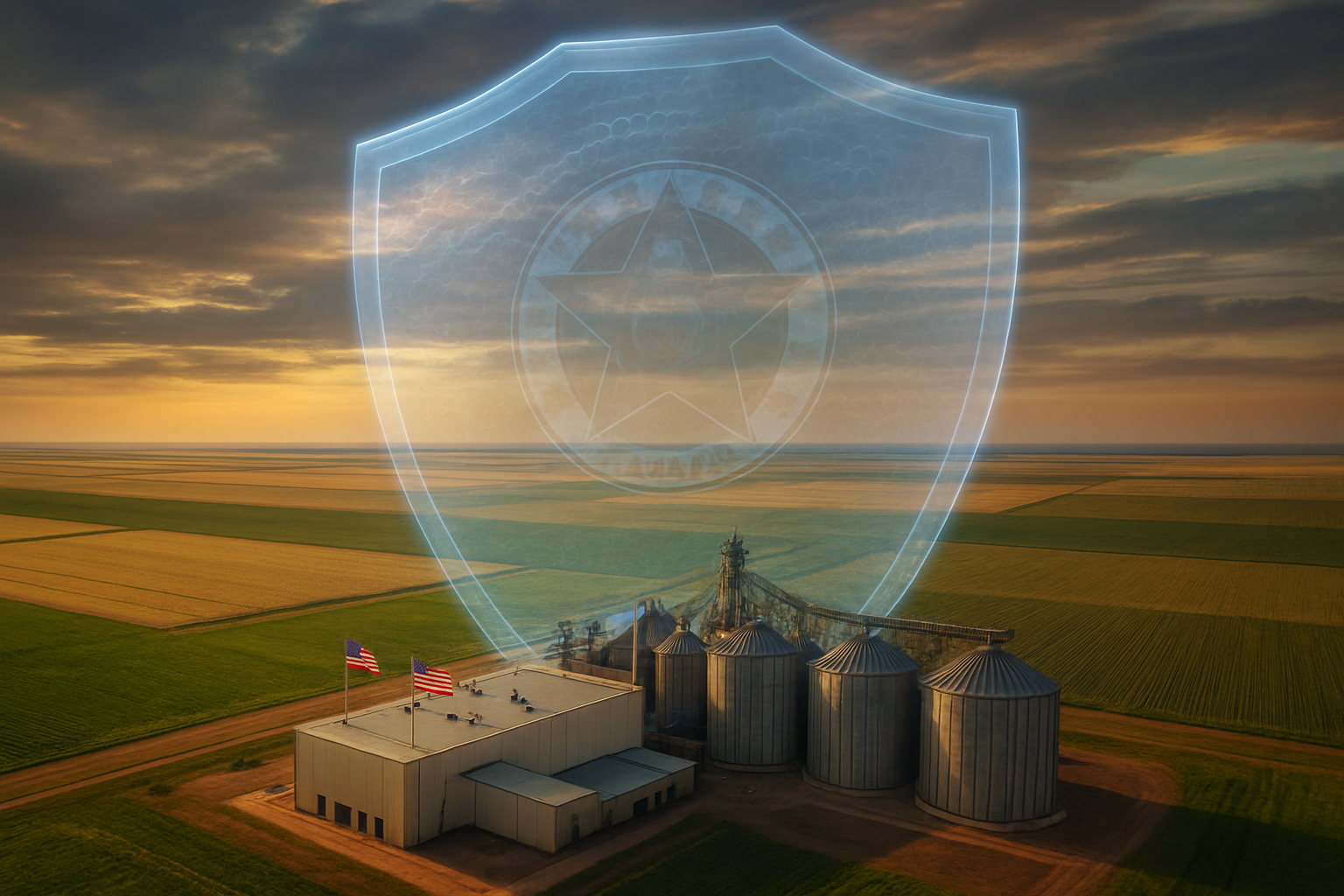
As of January 1, 2026, the landscape of American agricultural sovereignty has reached a critical juncture in the Great Plains. Following a three-year legislative blitz aimed at curbing foreign influence, Oklahoma has fully implemented a sweeping ban on land ownership by "adversarial" foreign nations, most notably China. However, the dust has settled to reveal a striking paradox: while the state has effectively slammed the door on new Chinese investments, the largest Chinese-owned agricultural footprint in the state—belonging to Smithfield Foods—remains not only intact but legally fortified.
This legislative outcome, finalized through a series of measures culminating in late 2025, represents a significant shift in how states balance national security concerns with the economic realities of global supply chains. By carving out specific exceptions for companies vetted by federal authorities, Oklahoma has created a blueprint for "selective protectionism" that secures existing industrial giants while freezing out future competitors from designated hostile nations.
A Three-Year Legislative Siege on Foreign Acreage
The path to the current status quo began in earnest in June 2023 with the passage of Senate Bill 212. Initially framed as a tool to combat illegal marijuana grow operations linked to foreign cartels, the law prohibited any non-U.S. citizen or "alien" from owning land directly or indirectly through business entities. However, the broad language of SB 212 was merely the opening salvo. In May 2024, Governor Kevin Stitt signed Senate Bill 1705, which sharpened the state’s focus by explicitly naming "foreign government adversaries," including China, Russia, North Korea, and Iran.
The most recent development, House Bill 1546, went into effect on November 1, 2025. This legislation closed "straw-man" loopholes and restricted foreign principals from acquiring property within 200 miles of military installations or critical infrastructure. Throughout this timeline, the primary tension was how to handle WH Group (HKG: 0288), the Hong Kong-listed parent company of Smithfield Foods. Despite the aggressive rhetoric from state leaders, Smithfield’s 2,575 acres in the Oklahoma panhandle—essential to its massive pork production facilities—were protected by a carefully crafted "CFIUS exception." This clause exempts any entity that has a national security agreement with the Committee on Foreign Investment in the United States, a federal body that cleared WH Group’s acquisition of Smithfield back in 2013.
Winners and Losers in the New Regulatory Climate
The primary beneficiary of this nuanced legislation is undoubtedly WH Group (HKG: 0288). By securing an explicit grandfather clause through the CFIUS exception, the company has avoided the fate of other foreign entities in neighboring states. While Syngenta (owned by the Chinese state-owned ChemChina) was forced by the state of Arkansas to divest its land holdings in 2023, Smithfield has successfully leveraged its deep roots in Oklahoma’s economy and a $1.58 million lobbying effort to maintain its operational status. This allows Smithfield to continue its vertical integration without the threat of forced liquidation.
Conversely, domestic competitors such as Tyson Foods, Inc. (NYSE: TSN) and Hormel Foods Corp (NYSE: HRL) find themselves in a complex position. On one hand, these American-based giants are "winners" in the sense that they face no such regulatory hurdles and may benefit from a market where future Chinese competition is legally barred. On the other hand, the survival of Smithfield’s operations means that a major rival remains entrenched in the region. Seaboard Corporation (NYSE American: SEB), which has significant pork processing interests in the Oklahoma panhandle, also faces a landscape where the "status quo" for established players is preserved, but the barrier to entry for any new international capital is now insurmountably high.
A Ripple Effect Across the Heartland
Oklahoma’s approach reflects a broader trend of "state-level foreign policy" that has swept through nearly two dozen U.S. states. However, the Oklahoma model is distinct for its deference to federal oversight. While some states have opted for blanket bans that risk legal challenges under the Equal Protection Clause, Oklahoma’s reliance on the CFIUS "shield" aligns state law with federal security vetting. This suggests a shift toward a more sophisticated regulatory environment where the "adversary" label is applied selectively based on a company’s history of federal compliance.
This event sets a precedent that could influence how other states handle large-scale foreign employers. The historical comparison to the 1970s, when states first began restricting foreign land ownership during a surge in Japanese investment, shows a recurring pattern of economic anxiety. However, the current focus on "adversarial nations" adds a layer of geopolitical strategy that was previously absent. For partners and competitors in the agricultural sector, the message is clear: existing investments are safe if they carry federal blessing, but the door is firmly locked for any new Chinese capital seeking to enter the American breadbasket.
The Road Ahead: Legal Challenges and Strategic Pivots
Looking toward the remainder of 2026 and beyond, the legal durability of these bans will likely be tested in the courts. Legal experts anticipate challenges based on the dormant Commerce Clause, arguing that states cannot interfere with international trade or federal foreign policy. If these bans are upheld, we may see a strategic pivot by foreign firms toward "asset-light" models, where they contract with American landowners rather than owning the soil themselves. This would allow companies like WH Group to expand their supply chains without triggering land-ownership restrictions.
Furthermore, the "200-mile military buffer" included in HB 1546 creates a massive geographic exclusion zone that covers nearly the entire state of Oklahoma, given the distribution of its military bases. This will likely force a consolidation of land among domestic players and established foreign entities like Smithfield, potentially driving up land prices in the few remaining "unrestricted" zones. Investors should expect a period of "land hoarding" by domestic agricultural REITs and large-scale producers who are now shielded from international bidding wars.
Summary and Outlook for Investors
The implementation of Oklahoma’s foreign land ban marks a significant victory for proponents of agricultural sovereignty, yet the "Smithfield exception" highlights the pragmatic limits of such policies. The key takeaway for the market is that established, federally-vetted foreign entities are currently safe from the "divestment wave" that hit companies like Syngenta in other jurisdictions. However, the environment for new foreign direct investment (FDI) in U.S. farmland has become toxic, particularly for entities with ties to the Chinese mainland.
Moving forward, the market will be defined by a "two-tier" system of land ownership. Investors should closely monitor the legal status of WH Group (HKG: 0288) as it navigates a political climate that remains hostile despite its legal protections. For those holding shares in Tyson Foods (NYSE: TSN) or Hormel (NYSE: HRL), the lack of foreign competition for new land acquisitions in the Midwest could provide a long-term tailwind for domestic expansion. The primary watchpoint for the coming months will be whether federal legislation—such as the AFIDA (Agricultural Foreign Investment Disclosure Act) reforms—will eventually override these state-level maneuvers, creating a unified national standard for foreign land ownership.
This content is intended for informational purposes only and is not financial advice.