An international team of scientists embark on a clinical study to understand what “true” lupus remission means by exploring hidden clues in patients’ immune cells, brain activity and gut
For patients living with Systemic Lupus Erythematosus (SLE), their immune systems mistakenly attack themselves, unleashing dangerous and painful levels of inflammation. For many, the goal is to reach remission, when symptoms disappear. While remission often means an end to obvious symptoms, scientists are exploring if it signifies complete healing, or if underlying issues, particularly in the brain, might still be “simmering” unnoticed.
This press release features multimedia. View the full release here: https://www.businesswire.com/news/home/20260318817972/en/
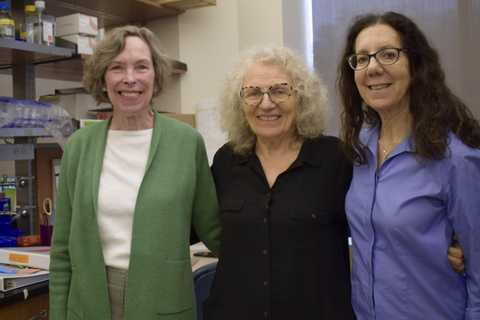
Drs. Meggan Mackay, Betty Diamond and Cynthia Aranow. (Credit: Feinstein Institutes)
To study this, scientists at Northwell Health’s Feinstein Institutes for Medical Research, along with a team of international experts, are launching a first-of-its-kind, multi-site global clinical study. This major project, supported by a special Lupus Research Alliance (LRA) Global Team Science Award and a $15 million five-year National Institutes of Health (NIH) grant, will dive deep into understanding what is happening in the body and brain of lupus patients who appear to be in long-term remission, and not taking strong medications.
“We believe it’s time to redefine what ‘remission’ means for lupus patients,” said Betty Diamond, MD, director of the Institute of Molecular Medicine at the Feinstein Institutes and Director of the Institute of Molecular Medicine and Maureen and Ralph Nappi professor of Autoimmune Diseases, who is leading the study. “Our research will explore if remission signifies a complete return to a healthy state, or if the body is finding a new, unique way to balance itself, and what is the brain’s role in this process.”
The study will involve patients in long-term remission, comparing them to those with active lupus and healthy individuals from around the world, including the United States (Los Angeles and New York), United Kingdom, Mexico, Ghana and South Africa. This diverse patient population will help ensure the findings are relevant to many and is split into two main parts:
Study 1: Decoding the immune system's “quiet” state: this study aims to uncover the underlying immunological mechanisms driving remission (cessation of overt disease activity). Cynthia Aranow, MD, professor in the Institute of Molecular Medicine, will co-lead this study which employs cutting-edge single-cell technologies, such as advanced sequencing methods, to meticulously examine individual immune cells within the blood. Researchers will analyze the cells’ genomic information (DNA), their messenger molecules (RNA), and their surface proteins. This detailed cellular analysis allows for an in-depth understanding of each cell’s functional status, rather than merely observing broad population trends.
Study 2: Investigating the neuro-immune axis in lupus remission: this study seeks to determine if this central nervous system (CNS) involvement persists even when clinical lupus is in remission. Meggan Mackay, MD, MS, professor in the Institute of Molecular Medicine, and David Eidelberg, MD, professor in the Institute of Molecular Medicine and Susan and Leonard Feinstein Professor of Neurology and Neurosciences, will co-lead this study and use neuroimaging techniques, including Positron Emission Tomography (PET) and Magnetic Resonance Imaging (MRI). These advanced scans will map regional brain metabolism (energy use), assess blood-brain barrier permeability (the integrity of the brain's protective barrier), identify glial cell activation (a marker of subtle inflammation), and analyze functional brain networks (how different brain regions communicate). Patients will also undergo comprehensive neuropsychological testing to evaluate cognitive abilities, and blood samples will be analyzed for specific biochemical markers, such as quinolinic/kynurenic acid (Q/K) ratios, which can indicate neuroinflammation. Beyond the primary investigations into blood and brain, the study will also integrate an exploration of the gut’s role in lupus remission. Researchers are recognizing that the gut microbiome — the vast community of bacteria residing in the intestines — and gut barrier integrity can significantly influence both immune function and overall brain health. By analyzing urine and stool samples from both healthy controls and lupus patients, the team will investigate whether these gut factors correlate with sustained remission, disease flares, or contribute to the intricate connections observed between the immune system and the brain.
“By meticulously investigating the biological aspects of lupus remission across both the immune system and the brain, Dr. Diamond and her colleagues’ across the globe will deepen our understanding of this complex disease,” said Kevin J. Tracey, MD, president and CEO of the Feinstein Institutes and Karches Family Distinguished Chair in Medical Research. “This knowledge could potentially inform highly personalized treatment approaches, ultimately fostering a future when individuals with lupus can achieve sustained, comprehensive well-being.”
Key collaborators in these studies include Dzifa Dey, MBChB, MSc, MSc, FRCP, FWACP, FGCPS, (University of Ghana Medical School UGMS, College of Health Sciences in Ghana), Riëtte du Toit, MD, (Stellenbosch University and Tygerberg Academic Hospital in South Africa), Hilda Fragoso-Loyo, MD, (Instituto Nacional de Ciencias Medicas y Nutricion, Salvador Zubirán in Mexico), David Isenberg, MD, ( from The National Hospital for Nervous Diseases and University College London Hospitals in the UK), and Maureen McMahon, MD, (in Los Angeles from University of California Los Angeles). Additionally, the research involves significant contributions from the Feinstein Institutes and Albert Einstein College of Medicine in New York.
About the Feinstein Institutes
The Feinstein Institutes for Medical Research is the home of the research institutes of Northwell Health, the largest health care provider and private employer in New York State. Encompassing 50+ research labs, 3,000 clinical research studies and 5,000 researchers and staff, the Feinstein Institutes raises the standard of medical innovation through its six institutes of behavioral science, bioelectronic medicine, cancer, health system science, molecular medicine, and translational research. We are the global scientific leader in bioelectronic medicine – an innovative field of science that has the potential to revolutionize medicine. The Feinstein Institutes publishes two open-access, international peer-reviewed journals Molecular Medicine and Bioelectronic Medicine. Through the Elmezzi Graduate School of Molecular Medicine, we offer an accelerated PhD program. For more information about how we produce knowledge to cure disease, visit http://feinstein.northwell.edu and follow us on LinkedIn.
View source version on businesswire.com: https://www.businesswire.com/news/home/20260318817972/en/
Contacts
Julianne Mosher Allen
516-880-4824
jmosherallen@northwell.edu