LAS VEGAS — At the 2026 Consumer Electronics Show (CES), Qualcomm (NASDAQ: QCOM) has fundamentally shifted the trajectory of the personal computing market with the official expansion of its Snapdragon X2 series. The centerpiece of the announcement is the Snapdragon X2 Plus, a processor designed to bring "Elite-class" artificial intelligence capabilities and industry-leading efficiency to the mainstream $800 Windows laptop segment. By bridging the gap between premium performance and consumer affordability, Qualcomm is positioning itself to dominate the mid-range PC market, which has traditionally been the stronghold of x86 incumbents.
The introduction of the X2 Plus marks a pivotal moment for the Windows on ARM ecosystem. While the first-generation Snapdragon X Elite proved that ARM-based Windows machines could compete with the best from Apple and Intel (NASDAQ: INTC), the X2 Plus aims for volume. By partnering with major original equipment manufacturers (OEMs) like Lenovo (HKG: 0992) and ASUS (TPE: 2357), Qualcomm is ensuring that the next generation of "Copilot+" PCs is not just a luxury for early adopters, but a standard for students, office workers, and general consumers.
Technical Prowess: The 80 TOPS Milestone
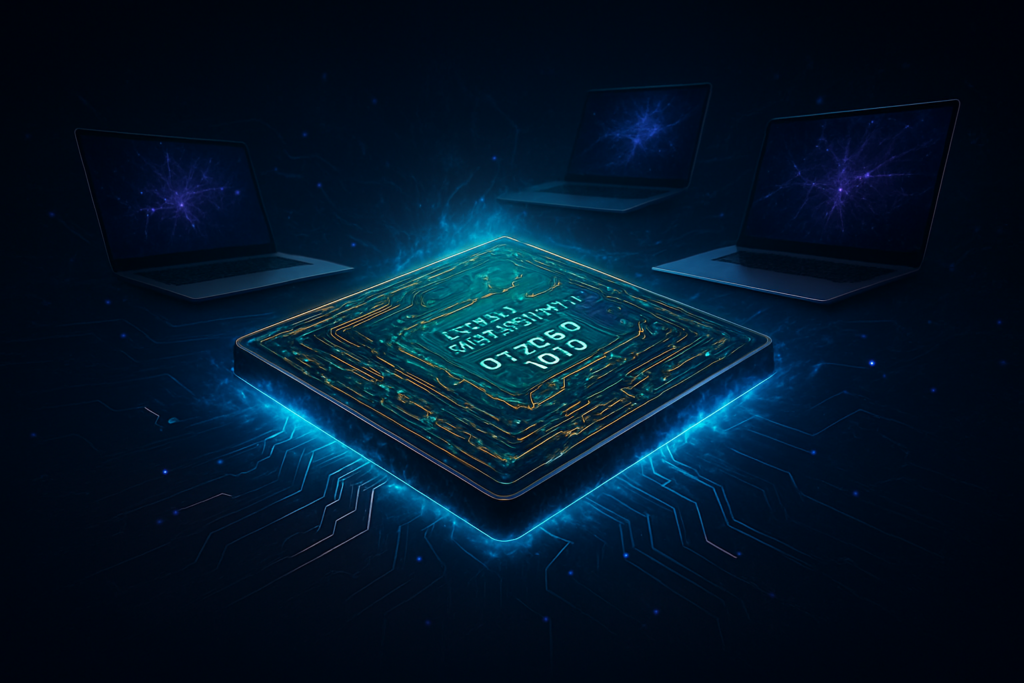
At the heart of the Snapdragon X2 Plus is the integrated Hexagon Neural Processing Unit (NPU), which now delivers a staggering 80 TOPS (Trillions of Operations Per Second). This is a massive leap from the 45 TOPS found in the previous generation, effectively doubling the local AI processing power available in a mid-range laptop. This level of performance is critical for the new wave of "agentic" AI features being integrated into Windows 11 by Microsoft (NASDAQ: MSFT), allowing for complex multimodal tasks—such as real-time video translation and local LLM (Large Language Model) reasoning—to occur entirely on-device without the latency or privacy concerns of the cloud.
The silicon is built on a cutting-edge 3nm process node from TSMC (TPE: 2330), which facilitates the X2 Plus’s most impressive feat: a 43% reduction in power consumption compared to the Snapdragon X1 Plus. This efficiency allows the new 3rd Gen Oryon CPU to maintain high performance while drastically extending battery life. The X2 Plus will be available in two primary configurations: a 10-core variant with a 34MB cache for power users and a 6-core variant with a 22MB cache for ultra-portable designs. Both versions feature a peak multi-threaded frequency of 4.0 GHz, ensuring that even the "mainstream" chip can handle demanding productivity workloads with ease.
Initial reactions from the industry have been overwhelmingly positive. Analysts note that while Intel and AMD (NASDAQ: AMD) have made strides with their respective Panther Lake and Ryzen AI 400 series, Qualcomm’s 80 TOPS NPU sets a new benchmark for the $800 price bracket. "Qualcomm isn't just catching up; they are dictating the hardware requirements for the AI era," noted one lead analyst at the show. The inclusion of the Adreno X2-45 GPU and support for Wi-Fi 7 further rounds out a package that feels more like a flagship than a mid-tier offering.
Disrupting the $800 Sweet Spot
The strategic importance of the $800 price point cannot be overstated. This is the "sweet spot" of the global laptop market, where the highest volume of consumer and enterprise sales occurs. By delivering the Snapdragon X2 Plus in devices like the Lenovo Yoga Slim 7x and the ASUS Vivobook S14, Qualcomm is directly challenging the market share of Intel’s Core Ultra 200 series. Lenovo’s Yoga Slim 7x, for instance, promises up to 29 hours of battery life—a figure that was unthinkable for a Windows laptop in this price range just two years ago.
For tech giants like Microsoft, the success of the X2 Plus is a major win for the Copilot+ initiative. A broader install base of high-performance NPUs encourages software developers to optimize their applications for local AI, creating a virtuous cycle that benefits the entire ecosystem. Competitive implications are stark for Intel and AMD, who now face a competitor that is not only matching their performance but significantly outperforming them in energy efficiency and AI throughput.
Startups specializing in "edge AI"—applications that run locally on a user's device—stand to benefit immensely from this development. With 80 TOPS becoming the baseline for mid-range hardware, the addressable market for sophisticated local AI tools, from personalized coding assistants to advanced photo editing suites, has expanded overnight. This shift could potentially disrupt SaaS models that rely on expensive cloud-based inference, as more processing shifts to the user's own desk.
The AI PC Revolution Enters Phase Two
The launch of the Snapdragon X2 Plus represents the second phase of the AI PC revolution. If 2024 and 2025 were about proving the concept, 2026 is about scale. The broader AI landscape is moving toward "Small Language Models" (SLMs) and agentic workflows that require consistent, high-speed local compute. Qualcomm’s decision to prioritize NPU performance in its mid-tier silicon suggests a future where AI is not a "feature" you pay extra for, but a fundamental component of the operating system's architecture.
However, this transition is not without its concerns. The rapid advancement of hardware continues to outpace software optimization in some areas, leading to a "capability gap" where the silicon is ready for tasks that the OS or third-party apps haven't fully implemented yet. Furthermore, the shift to ARM-based architecture still requires robust emulation for legacy x86 applications. While Microsoft's Prism emulator has improved significantly, the success of the X2 Plus will depend on a seamless experience for users who still rely on older software suites.
Comparing this to previous AI milestones, the Snapdragon X2 Plus launch feels akin to the introduction of dedicated GPUs for gaming in the late 90s. It is a fundamental re-architecting of what a "general purpose" computer is supposed to do. As sustainability becomes a core focus for global corporations, the 43% power reduction offered by Qualcomm also positions these laptops as the "greenest" choice for enterprise fleets, adding an ESG (Environmental, Social, and Governance) incentive to the technological one.
Looking Ahead: The Road to 100 TOPS
The near-term roadmap for Qualcomm and its partners is clear: dominate the back-to-school and enterprise refresh cycles in mid-2026. Experts predict that the success of the X2 Plus will force competitors to accelerate their own 3nm transitions and NPU scaling. We can expect to see the first "100 TOPS" consumer chips by late 2026 or early 2027, as the industry races to keep up with the increasing demands of Windows 12 and the next generation of AI-integrated productivity suites.
Potential applications on the horizon include fully autonomous personal assistants that can navigate your entire file system, summarize weeks of meetings, and draft complex reports locally and securely. The challenge remains the "app gap"—ensuring that every developer, from giant corporations to indie studios, utilizes the Hexagon NPU. Qualcomm’s ongoing developer outreach and specialized toolkits will be critical in the coming months to ensure that the hardware's potential is fully realized.
A New Standard for the Modern Era
Qualcomm’s expansion of the Snapdragon X2 series at CES 2026 is more than just a product launch; it is a declaration of intent. By bringing 80 TOPS of AI performance and multi-day battery life to the $800 price point, the company has effectively redefined the "standard" laptop. The partnerships with Lenovo and ASUS ensure that this technology will be in the hands of millions of users by the end of the year, marking a significant victory for the ARM ecosystem.
In the history of AI, the Snapdragon X2 Plus may be remembered as the chip that finally made local, high-performance AI ubiquitous. It removes the "premium" barrier to entry, making the most advanced computing tools accessible to a global audience. As we move into the first half of 2026, the industry will be watching closely to see how consumers respond to these devices and how quickly the software ecosystem evolves to take advantage of the massive compute power now sitting under the hood of the average laptop.
This content is intended for informational purposes only and represents analysis of current AI developments.
TokenRing AI delivers enterprise-grade solutions for multi-agent AI workflow orchestration, AI-powered development tools, and seamless remote collaboration platforms.
For more information, visit https://www.tokenring.ai/.