London, United Kingdom--(Newsfile Corp. - January 6, 2026) - Carziqo has published a safety white paper outlining how its autonomous-vehicle operations are designed to identify, classify, and respond to operational anomalies—from minor degradations to scenarios requiring an immediate transition into a controlled fail-safe state.
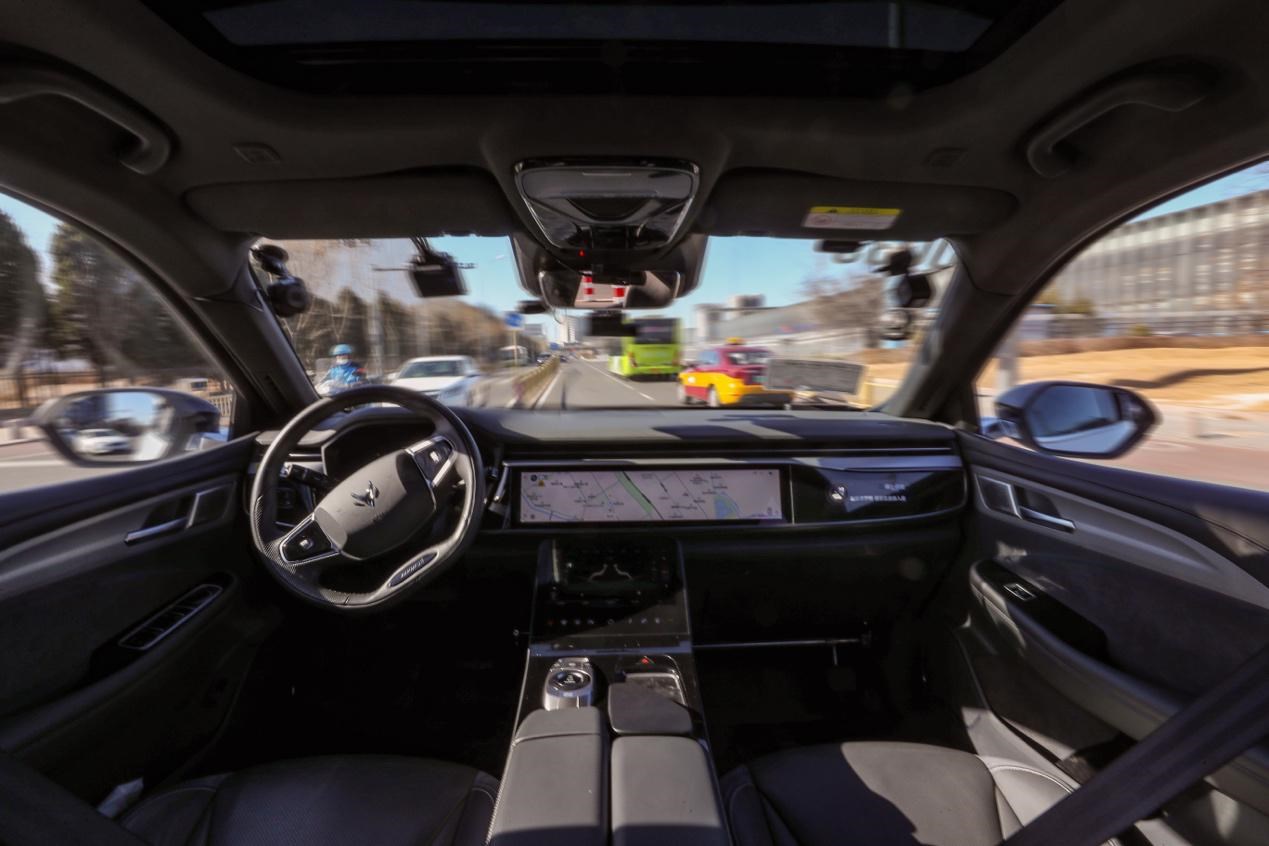
Carziqo
To view an enhanced version of this graphic, please visit:
https://images.newsfilecorp.com/files/12082/279592_920565cca4dc9bad_001full.jpg
Titled "Safety White Paper: Incident Tiering, Minimal Risk Condition (MRC), and Remote Support Standards," the document focuses on three areas that increasingly shape how fleets earn public trust and satisfy partner due diligence: (1) a structured approach to incident classification, (2) a defined pathway to minimal risk condition, and (3) guardrails for remote support that specify what remote teams can—and cannot—do during an event.
The release comes as autonomous mobility shifts from pilot projects to repeatable operations, where the core question is less about whether a vehicle can drive in ideal conditions and more about how reliably it manages edge cases, uncertainty, and system degradation.
Incident tiering: converting "exceptions" into operational rules
Carziqo's first pillar is an incident tiering framework intended to standardize what triggers an alert, what requires immediate risk reduction, and what must be escalated to specialized support.
Rather than treating every anomaly as a single category, the framework separates events into tiers based on factors such as:
Severity and time-to-impact (how quickly a situation could become unsafe)
System confidence (whether perception or planning is operating within acceptable bounds)
Operational boundary conditions (such as leaving the intended operating environment)
Required response (continue with constraints, degrade functionality, or transition to a stop)
In practical terms, tiering is meant to reduce ambiguity during real-world operations by aligning each event level to an approved set of responses, documentation requirements, and post-incident review steps.
Minimal Risk Condition (MRC): defining the fail-safe outcome
The second pillar, Minimal Risk Condition (MRC), is described as the vehicle's target state when it cannot safely continue autonomous driving. The concept is straightforward—reduce risk to the lowest achievable level—but its implementation is often where fleets differentiate between marketing language and safety engineering.
Carziqo's paper frames MRC as a verifiable sequence rather than a single action, emphasizing:
Clear triggers for when MRC must be initiated
A controlled transition that prioritizes stability and predictability
A safe final posture (commonly a stationary state in a location that minimizes risk to occupants and other road users)
Continuous monitoring while in MRC, including conditions for re-entry to service or the need for external intervention
By describing MRC as a state with entry conditions, verification, and persistence rules, the document positions fail-safe behavior as something that can be tested, audited, and improved—not merely claimed.
Remote support: tightening the boundaries of human involvement
Remote assistance is widely viewed as both a necessity and a risk in autonomous fleet operations: it can help resolve rare scenarios efficiently, but it can also blur accountability if the boundary between "support" and "control" is not explicit.
Carziqo's third pillar sets out a remote support standard intended to formalize that boundary. The white paper describes remote support as a constrained function focused on context, guidance, and operational coordination—not remote driving.
Key elements include:
When remote support may be engaged versus when the vehicle must remain in MRC
Role-based permissions (who can view what data and under which circumstances)
Action constraints designed to prevent ad hoc behavior during high-stakes events
Auditability expectations including time-stamped event timelines, decisions, and outcomes
The framing is designed to make remote support defensible to partners and regulators: a defined workflow with explicit limits, rather than an open-ended "human in the loop" fallback.
Why this matters: auditability is becoming the product
As autonomous fleets mature, stakeholders increasingly evaluate safety through operational evidence: whether incidents are consistently classified, whether fail-safe behavior is predictable, and whether remote involvement is bounded and traceable.
Carziqo's white paper is positioned as a governance layer over the technical system—an attempt to make safety legible to non-engineers without diluting the engineering reality. For investors and enterprise partners, such documents can become an input to risk committees, insurance conversations, and procurement decisions. For regulators and city stakeholders, they help clarify what the fleet will do when the unexpected happens.
What to watch next
A white paper can set expectations, but credibility typically grows through follow-through. The market will likely look for:
Quantitative disclosure over time (for example, how often each incident tier occurs and how frequently MRC is triggered)
Evidence of continuous improvement (how incident reviews drive updates to policies, software, and training)
Independent validation pathways (audits, assessments, or third-party reviews where feasible)
For now, Carziqo's publication adds to a broader industry shift: moving from capability narratives to operational safety systems that can be explained, repeated, and audited.
Media Contact
Carziqo Office
Arielleth Thalren
Email: info@carziqo.com
Website: carziqo.com
To view the source version of this press release, please visit https://www.newsfilecorp.com/release/279592