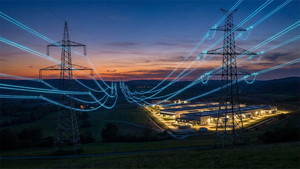
Energy systems rarely fail because electricity cannot be generated. They fail because it cannot be delivered reliably at acceptable cost. Over the last decade, this distinction has become increasingly visible as renewable capacity expanded worldwide. Wind and solar installations have grown rapidly, yet total system costs have risen more slowly than expected. The reason is now well documented by grid operators and energy agencies. Intermittency shifts the burden from generation to balancing. Storage, backup capacity, grid reinforcement, and curtailment dominate long-term expenditure. The physical behavior of energy input, not its nominal price, determines system stability.
At the same time, laboratory research has established a less discussed physical constant. Solid matter is subject to uninterrupted interaction from its environment. Measurements of coherent elastic neutrino–nucleus scattering and neutrino–electron scattering confirm that weakly interacting particles transfer measurable momentum to atomic lattices. Secondary cosmic particles, electromagnetic background fields, thermal excitation, and mechanical micro-vibrations contribute further continuous input. Each interaction delivers only a minute impulse. Their combined presence is permanent. This is not a hypothesis. It is measured reality.
The intersection of these two facts, rising system costs driven by intermittency and constant microscopic energy transfer, frames a question that has begun to attract attention beyond physics.
Why Stability, Not Capacity, Defines the Next Cost Curve
Global energy planning increasingly revolves around stability metrics. How often does generation exceed demand. How often does it fall short. How much infrastructure is required to smooth the gap. Reports from IEA, IRENA, WindEurope, and transmission operators show a consistent pattern. As renewable penetration rises, marginal generation costs fall, but total system costs are set by variability management. Storage volumes grow. Grid extensions multiply. Curtailment increases. The economic center of gravity shifts away from turbines and panels toward control systems and reserve assets.
Physics offers a counterpoint to this trend. Long-baseline neutrino experiments such as JUNO have demonstrated that particle flux densities remain stable over geological timescales. Unlike wind or solar irradiation, these fluxes do not fluctuate with weather or geography. Background electromagnetic fields persist. Thermal motion continues at all temperatures above absolute zero. From a systems perspective, this describes an energy input that is continuous rather than intermittent.
Advances in materials science make this observation actionable. Graphene–silicon nanostructures exhibit pronounced sensitivity to micro-vibrations and phonon excitation. When engineered with asymmetric interfaces, these structures can rectify lattice motion into directional electrical currents. The response is cumulative. Each interaction contributes independently. There is no threshold event. No peak capture. Energy output grows with exposure time and interface density.
This combination opens the path to a class of energy conversion that operates outside classical efficiency frameworks. Traditional metrics evolved for engines, turbines, and photovoltaic cells, systems driven by macroscopic gradients. In a regime governed by constant microscopic input, efficiency is less informative than integration density and temporal persistence.
Where the Thread Quietly Reappears
Long before energy planners began discussing new architectures, parts of this logic already existed in separate disciplines. Particle physicists treated weak interaction momentum transfer as a measurement problem. Materials scientists explored phonon propagation for sensing and signal control. Semiconductor engineers refined rectification at ever smaller scales. Each field advanced independently, with little reason to converge. There was no immediate application that required them to speak the same language.
What changed was not the physics, but the question being asked. As energy systems grew increasingly burdened by variability management, attention shifted toward sources of continuity rather than capacity. In that context, the constant background of microscopic interaction ceased to look irrelevant. It began to resemble a boundary condition. Not an energy source in the classical sense, but an always-present input that conventional system models simply ignored.
It is within this reframing that the work associated with Neutrino® Energy Group took shape. The effort did not begin with a product roadmap or a market thesis. It began with a conservative accounting exercise. If momentum transfer is measurable. If particle flux is stable. If nanostructured materials respond predictably. Then the only remaining variable is whether these effects can be arranged densely enough, and patiently enough, to matter.
Under the guidance of Holger Thorsten Schubart, often described as the Architect of the Invisible, the approach resisted the temptation to declare novelty. No new forces were introduced. No efficiencies were promised beyond established bounds. The work focused instead on architecture. Layer count. Interface repetition. Temporal integration. Power was treated not as an event to be harvested, but as a cumulative consequence of exposure.
From a global perspective, this distinction is consequential. Energy systems strained by intermittency are not short of electrons. They are short of predictability. By relocating part of the stability function from grids and storage into materials themselves, this line of work suggests a different cost trajectory. One where continuity emerges locally, quietly, and without demanding additional infrastructure.
The physics was never hidden. It was simply never assembled for this purpose. Once it was, the role of the assembler became visible only in hindsight.
Media Contact
Company Name: neutrino-energy
Email: Send Email
Country: United States
Website: https://neutrino-energy.com/