Just days after the landmark announcement of a multi-year partnership with Alphabet Inc. (NASDAQ: GOOGL), Apple (NASDAQ: AAPL) has solidified its position in the artificial intelligence arms race. On January 12, 2026, the Cupertino giant confirmed that Google’s Gemini 3 will now serve as the foundational engine for Siri’s high-level reasoning, marking a definitive shift in Apple’s roadmap. By combining Google's advanced large language models with Apple’s proprietary "Private Cloud Compute" (PCC) infrastructure, the company is finally executing its plan to bring sophisticated generative AI to its massive global install base of over 2.3 billion active devices.
This week’s developments represent the culmination of a two-year pivot for Apple. While the company initially positioned itself as a "on-device only" AI player, the reality of 2026 demands a hybrid approach. Apple’s strategy is now clear: use on-device processing for speed and intimacy, use the "Baltra" custom silicon in the cloud for complexity, and lease the "world knowledge" of Gemini to ensure Siri is no longer outmatched by competitors like Microsoft (NASDAQ: MSFT) or OpenAI.
The Silicon Backbone: Private Cloud Compute and the 'Baltra' Breakthrough
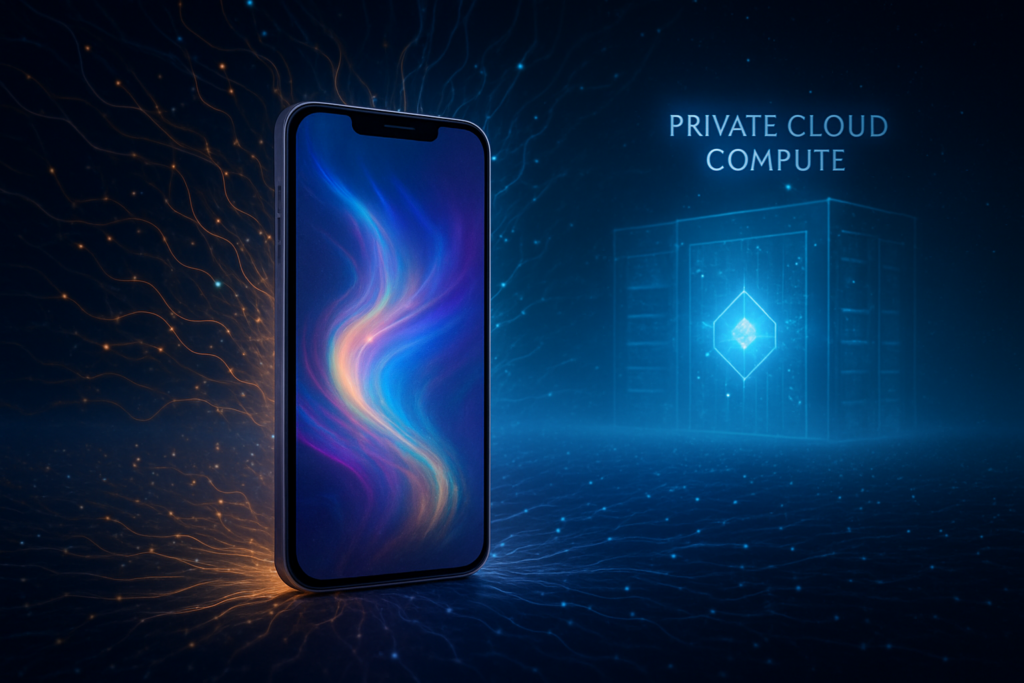
The technical cornerstone of this roadmap is the evolution of Private Cloud Compute (PCC). Unlike traditional cloud AI that stores user data or logs prompts for training, PCC utilizes a "stateless" environment. Data sent to Apple’s AI data centers is processed in isolated enclaves where it is never stored and remains inaccessible even to Apple’s own engineers. To power this, Apple has transitioned from off-the-shelf server chips to a dedicated AI processor codenamed "Baltra." Developed in collaboration with Broadcom (NASDAQ: AVGO), these 3nm chips are specialized for large language model (LLM) inference, providing the necessary throughput to handle the massive influx of requests from the iPhone 17 and the newly released iPhone 16e.
This technical architecture differs fundamentally from the approaches taken by Amazon (NASDAQ: AMZN) or Google. While other giants prioritize data collection to improve their models, Apple has built a "privacy-sealed vehicle." By releasing its Virtual Research Environment (VRE) in late 2025, Apple allowed third-party security researchers to cryptographically verify its privacy claims. This move has largely silenced critics in the AI research community who previously argued that "cloud AI" and "privacy" were mutually exclusive terms. Experts now view Apple’s hybrid model—where the phone decides whether a task is "personal" (processed on-device) or "complex" (sent to PCC)—as the new gold standard for consumer AI safety.
A New Era of Competition: The Apple-Google Paradox
The integration of Gemini 3 into the Apple ecosystem has sent shockwaves through the tech industry. For Alphabet, the deal is a massive victory, reportedly worth over $1 billion annually, securing its place as the primary search and intelligence provider for the world’s most lucrative user base. However, for Samsung (KRX: 005930) and other Android manufacturers, the move erodes one of their key advantages: the perceived "intelligence gap" between Siri and the Google Assistant. By adopting Gemini, Apple has effectively commoditized the underlying model while focusing its competitive energy on the user experience and privacy.
This strategic positioning places significant pressure on NVIDIA (NASDAQ: NVDA) and Microsoft. As Apple increasingly moves toward its own "Baltra" silicon for its cloud needs, its reliance on generic AI server farms diminishes. Furthermore, startups in the AI agent space now face a formidable "incumbent moats" problem. With Siri 2.0 capable of "on-screen awareness"—meaning it can see what is in your apps and take actions across them—the need for third-party AI assistants has plummeted. Apple is not just selling a phone anymore; it is selling a private, proactive agent that lives across a multi-device ecosystem.
Normalizing the 'Intelligence' Brand: The Social and Regulatory Shift
Beyond the technical and market implications, Apple’s roadmap is a masterclass in AI normalization. By branding its features as "Apple Intelligence" rather than "Generative AI," the company has successfully distanced itself from the "hallucination" and "deepfake" controversies that plagued 2024 and 2025. The phased rollout, which saw expansion into the European Union and Asia in mid-2025 following intense negotiations over the Digital Markets Act (DMA), has proven that Apple can navigate complex regulatory landscapes without compromising its core privacy architecture.
The wider significance lies in the sheer scale of the deployment. By targeting 2 billion users, Apple is moving AI from a niche tool for tech enthusiasts into a fundamental utility for the average consumer. Concerns remain, however, regarding the "hardware gate." Because Apple Intelligence requires a minimum of 8GB to 12GB of RAM and high-performance Neural Engines, hundreds of millions of users with older iPhones are being pushed into a massive "super-cycle" of upgrades. This has raised questions about electronic waste and the digital divide, even as Apple touts the environmental efficiency of its new 3nm silicon.
The Road to iOS 27 and Agentic Autonomy
Looking ahead to the remainder of 2026, the focus will shift to "Conversational Memory" and the launch of iOS 27. Internal leaks suggest that Apple is working on a feature that allows Siri to maintain context over days or even weeks, potentially acting as a life-coach or long-term personal assistant. This "agentic AI" will be able to perform complex, multi-step tasks such as "reorganize my travel itinerary because my flight was canceled and notify my hotel," all without user intervention.
The long-term roadmap also points toward the integration of Apple Intelligence into the rumored "Apple Glasses," expected to be teased at WWDC 2026 this June. With the foundation of Gemini for world knowledge and PCC for private processing, wearable AI represents the next frontier for the company. Challenges persist, particularly in maintaining low latency and managing the thermal demands of such powerful models on wearable hardware, but industry analysts predict that Apple’s vertical integration of software, silicon, and cloud services gives them an insurmountable lead in this category.
Conclusion: The New Standard for the AI Era
Apple’s January 2026 roadmap updates mark a definitive turning point in the history of personal computing. By successfully merging the raw power of Google’s Gemini with the uncompromising security of Private Cloud Compute, Apple has redefined what consumers should expect from their devices. The company has moved beyond being a hardware manufacturer to becoming a curator of "private intelligence," effectively bridging the gap between cutting-edge AI research and mass-market utility.
As we move into the spring of 2026, the tech world will be watching the public rollout of Siri 2.0 with bated breath. The success of this launch will determine if Apple can maintain its premium status in an era where software intelligence is the new currency. For now, one thing is certain: the goal of putting generative AI in the pockets of two billion people is no longer a vision—it is an operational reality.
This content is intended for informational purposes only and represents analysis of current AI developments.
TokenRing AI delivers enterprise-grade solutions for multi-agent AI workflow orchestration, AI-powered development tools, and seamless remote collaboration platforms.
For more information, visit https://www.tokenring.ai/.