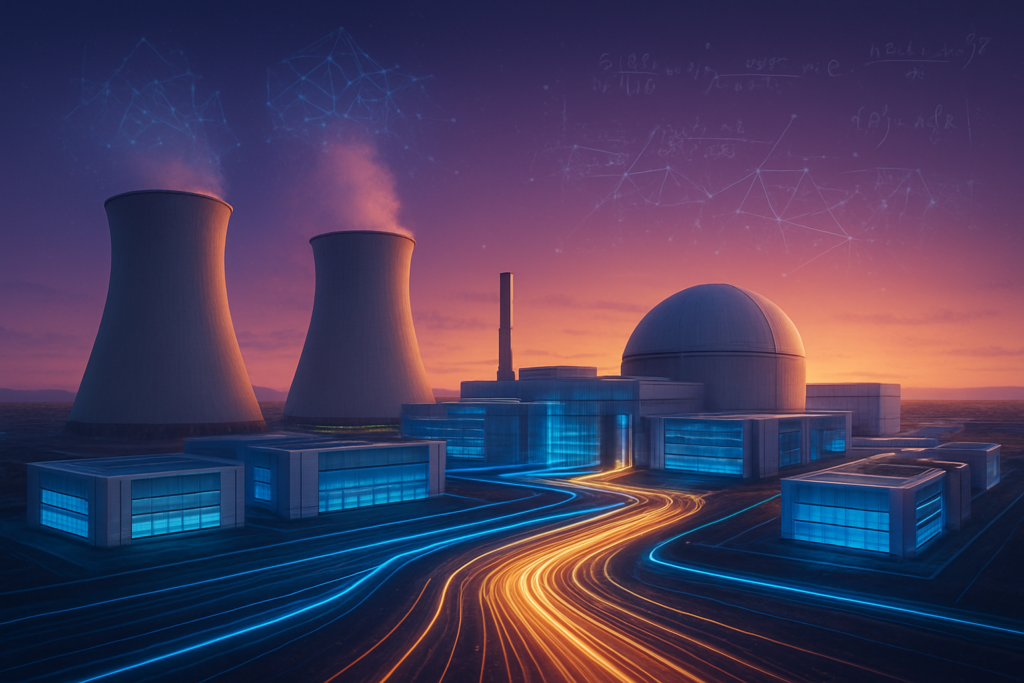
In a move that signals a paradigm shift in the global race for artificial intelligence supremacy, Meta Platforms (NASDAQ: META) has announced a historic series of power purchase agreements to secure a staggering 6.6 gigawatts (GW) of nuclear energy. Announced on January 9, 2026, the deal establishes a multi-decade partnership with energy giants Vistra Corp (NYSE: VST) and the Bill Gates-backed TerraPower, marking the largest corporate commitment to nuclear energy in history. This massive injection of "baseload" power is specifically earmarked to fuel Meta's next generation of AI superclusters, which are expected to push the boundaries of generative AI and personal superintelligence.
The announcement comes at a critical juncture for the tech industry, as the power demands of frontier AI models have outstripped the capacity of traditional renewable energy sources like wind and solar. By securing a reliable, 24/7 carbon-free energy supply, Meta is not only insulating its operations from grid volatility but also positioning itself to build the most advanced computing infrastructure on the planet. CEO Mark Zuckerberg framed the investment as a foundational necessity, stating that the ability to engineer and partner for massive-scale energy will become the primary "strategic advantage" for technology companies in the late 2020s.
The Technical Backbone: From Existing Reactors to Next-Gen SMRs
The 6.6 GW commitment is a complex, multi-tiered arrangement that combines immediate power from existing nuclear assets with long-term investments in experimental Small Modular Reactors (SMRs). Roughly 2.6 GW will be provided by Vistra Corp through its established nuclear fleet, including the Beaver Valley, Perry, and Davis-Besse plants in Pennsylvania and Ohio. A key technical highlight of the Vistra portion involves "uprating"—the process of increasing the maximum power level at which a commercial nuclear power plant can operate—which will contribute an additional 433 MW of capacity specifically for Meta's nearby data centers.
The forward-looking half of the deal focuses on Meta's partnership with TerraPower to deploy advanced Natrium sodium-cooled fast reactors. These reactors are designed to be more efficient than traditional light-water reactors and include a built-in molten salt energy storage system. This storage allows the plants to boost their output by up to 1.2 GW for short periods, providing the flexibility needed to handle the "bursty" power demands of training massive AI models. Furthermore, the deal includes a significant 1.2 GW commitment from Oklo Inc. (NYSE: OKLO) to develop an advanced nuclear technology campus in Pike County, Ohio, using their "Aurora" powerhouse units to create a localized microgrid for Meta's high-density compute clusters.
This infrastructure is destined for Meta’s most ambitious hardware projects to date: the "Prometheus" and "Hyperion" superclusters. Prometheus, a 1-gigawatt AI cluster located in New Albany, Ohio, is slated to become the industry’s first "gigawatt-scale" facility when it comes online later this year. Hyperion, planned for Louisiana, is designed to eventually scale to a massive 5 GW. Unlike previous data center designs that relied on traditional grid connections, these "Nuclear AI Parks" are being engineered as vertically integrated campuses where the power plant and the data center exist in a symbiotic, high-efficiency loop.
The Big Tech Nuclear Arms Race: Strategic Implications
Meta’s 6.6 GW deal places it at the forefront of a burgeoning "nuclear arms race" among Big Tech firms. While Microsoft (NASDAQ: MSFT) made waves in late 2024 with its plan to restart Three Mile Island and Amazon (NASDAQ: AMZN) secured power from the Susquehanna plant, Meta’s deal is significantly larger in both scale and technological diversity. By diversifying its energy portfolio across existing large-scale plants and emerging SMR technology, Meta is mitigating the regulatory and construction risks associated with new nuclear projects.
For Meta, this move is as much about market positioning as it is about engineering. CFO Susan Li recently indicated that Meta's capital expenditures for 2026 would rise significantly above the $72 billion spent in 2025, with much of that capital flowing into these long-term energy contracts and the specialized hardware they power. This aggressive spending creates a high barrier to entry for smaller AI startups and even well-funded labs like OpenAI, which may struggle to secure the massive, 24/7 power supplies required to train the next generation of "Level 5" AI models—those capable of autonomous reasoning and scientific discovery.
The strategic advantage extends beyond pure compute power. By securing "behind-the-meter" power—electricity generated and consumed on-site—Meta can bypass the increasingly congested US electrical grid. This allows for faster deployment of new data centers, as the company is no longer solely dependent on the multi-year wait times for new grid interconnections that have plagued the industry. Consequently, Meta is positioning its "Meta Compute" division not just as an internal service provider, but as a sovereign infrastructure entity capable of out-competing national-level investments in AI capacity.
Redefining the AI Landscape: Power as the Ultimate Constraint
The shift toward nuclear energy highlights a fundamental reality of the 2026 AI landscape: energy, not just data or silicon, has become the primary bottleneck for artificial intelligence. As models transition from simple chatbots to agentic systems that require continuous, real-time "thinking" and scientific simulation, the "FLOPs-per-watt" efficiency has become the most scrutinized metric in the industry. Meta's decision to pivot toward nuclear reflects a broader trend where "clean baseload" is the only viable path forward for companies committed to Net Zero goals while simultaneously increasing their power consumption by orders of magnitude.
However, this trend is not without its concerns. Critics argue that Big Tech’s "cannibalization" of existing nuclear capacity could lead to higher electricity prices for residential consumers as the supply of carbon-free baseload power is diverted to AI. Furthermore, while SMRs like those from TerraPower and Oklo offer a promising future, the technology remains largely unproven at a commercial scale. There are significant regulatory hurdles and potential delays in the NRC (Nuclear Regulatory Commission) licensing process that could stall Meta’s ambitious timeline.
Despite these challenges, the Meta-Vistra-TerraPower deal is being compared to the historic "Manhattan Project" in its scale and urgency. It represents a transition from the era of "Software is eating the world" to "AI is eating the grid." By anchoring its future in atomic energy, Meta is signaling that it views the development of AGI (Artificial General Intelligence) as an industrial-scale endeavor requiring the most concentrated form of energy known to man.
The Road to Hundreds of Gigawatts: Future Developments
Looking ahead, Meta’s 6.6 GW deal is only the beginning. Mark Zuckerberg has hinted that the company’s internal roadmap involves scaling to "tens of gigawatts this decade, and hundreds of gigawatts or more over time." This trajectory suggests that Meta may eventually move toward owning and operating its own nuclear assets directly, rather than just signing purchase agreements. There is already speculation among industry analysts that Meta’s next move will involve international nuclear partnerships to power data centers in Europe and Asia, where energy costs are even more volatile.
In the near term, the industry will be watching the "Prometheus" site in Ohio very closely. If Meta successfully integrates a 1 GW AI cluster with a dedicated nuclear supply, it will serve as a blueprint for the entire tech sector. We can also expect to see a surge in M&A activity within the nuclear sector, as other tech giants scramble to secure the remaining available capacity from aging plants or invest in the next wave of fusion energy startups, which remain the "holy grail" for the post-2030 era.
The primary challenge remaining is the human and regulatory element. Building nuclear reactors—even small ones—requires a specialized workforce and rigorous safety oversight. Meta is expected to launch a massive "Infrastructure and Nuclear Engineering" recruitment drive throughout 2026 to manage these assets. How quickly the NRC can adapt to the "move fast and break things" culture of Silicon Valley will be the defining factor in whether these gigawatts actually hit the wires on schedule.
A New Era for AI and Energy
Meta’s 6.6 GW nuclear deal is more than just a utility contract; it is a declaration of intent. It marks the moment when the digital world fully acknowledged its physical foundations. By tying the future of Llama 6 and beyond to the stability of the atom, Meta is ensuring that its AI ambitions will not be throttled by the limitations of the existing power grid. This development will likely be remembered as the point where the "Big Tech" era evolved into the "Big Infrastructure" era.
The significance of this move in AI history cannot be overstated. We have moved past the point where AI is a matter of clever algorithms; it is now a matter of planetary-scale resource management. For investors and industry observers, the key metrics to watch in the coming months will be the progress of the "uprating" projects at Vistra’s plants and the permitting milestones for TerraPower’s Natrium reactors. As the first gigawatts begin to flow into the Prometheus supercluster, the world will get its first glimpse of what AI can achieve when it is no longer constrained by the limits of the traditional grid.
This content is intended for informational purposes only and represents analysis of current AI developments.
TokenRing AI delivers enterprise-grade solutions for multi-agent AI workflow orchestration, AI-powered development tools, and seamless remote collaboration platforms.
For more information, visit https://www.tokenring.ai/.