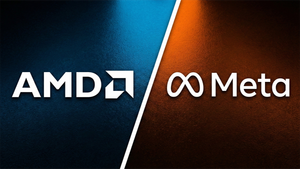
SANTA CLARA, CA – The semiconductor landscape has shifted on its axis this week as shares of Advanced Micro Devices (NASDAQ: AMD) surged to record highs, fueled by a transformative multi-year artificial intelligence infrastructure agreement with Meta Platforms (NASDAQ: META). The rally, which saw AMD's stock climb as much as 14% in late February 2026 trading, represents more than just a momentary market gain; it signals the first credible challenge to Nvidia’s long-standing hegemony in the high-end GPU market. As the industry transitions from the initial "gold rush" of AI training to a sustained era of large-scale inference and "personal superintelligence," the alliance between the chip designer and the social media giant has become the focal point of Wall Street's attention.
Industry analysts are calling this the "Milan moment" for AMD’s data center business—a reference to the 2021 server chip breakthrough that allowed the company to begin eating into Intel’s dominant market share. By securing a deal estimated to be worth between $60 billion and $100 billion over the next five years, AMD has moved from being a "secondary challenger" to a "tier-1" hyperscale platform provider. The market's reaction reflects a newfound confidence that AMD’s software stack, ROCm, has finally matured enough to support frontier-scale AI models, effectively breaking the "CUDA moat" that had previously tethered the industry almost exclusively to Nvidia.
The Landmark 6-Gigawatt Agreement
The specifics of the agreement, which culminated in a massive rally on February 25, 2026, detail a 6-gigawatt (GW) compute partnership—the largest of its kind in the history of the semiconductor industry. At the heart of this deal is the deployment of AMD’s next-generation Instinct MI450 series accelerators and the newly unveiled "Helios" rack-scale system. Unlike previous one-off hardware purchases, this is a deep roadmap alignment where Meta and AMD are co-innovating on silicon and systems through the Open Compute Project (OCP) standards. The timeline for the project is aggressive: while the deal was finalized in early 2026, the first 1GW phase of deployment is scheduled to begin shipping in the second half of 2026, providing a massive revenue catalyst for the upcoming fiscal years.
One of the most striking features of this partnership is its unique financial structure. In a move orchestrated by AMD CEO Dr. Lisa Su, the deal includes a performance-based equity warrant for Meta, allowing the social media giant to acquire up to 160 million shares—roughly 10% of AMD—contingent on meeting specific deployment milestones and stock price targets as high as $600 per share. This "chips-for-shares" arrangement gives Meta a direct stake in AMD’s success, ensuring that the two companies are deeply incentivized to optimize the hardware-software integration for Meta’s Llama series of large language models. The initial market reaction was electric, with heavy trading volume as institutional investors scrambled to adjust their exposure to what is now being termed the "AMD-Meta AI Axis."
Ecosystem Winners and Competitive Fallout
The ripple effects of this deal extend far beyond the two primary parties, creating a clear list of winners and potential strategic losers. Samsung (KRX: 005930), which has been tapped as the primary supplier for the 12-high HBM4 memory stacks used in the MI450, stands to gain significant ground against rival SK Hynix. By providing the massive 432GB memory capacity required for AMD’s new chips, Samsung has effectively secured its place in the next generation of AI infrastructure. Networking specialists like Broadcom (NASDAQ: AVGO) and Marvell Technology (NASDAQ: MRVL) are also emerging as winners, as the Helios system utilizes their open-standard Ethernet and UALink switching architectures to facilitate communication between thousands of GPUs. Furthermore, Astera Labs (NASDAQ: ALAB), which provides critical connectivity solutions like PCIe retimers, has seen its stock buoyed by its inclusion in the Helios reference design.
On the other side of the ledger, Nvidia (NASDAQ: NVDA) faces its most significant competitive threat since the AI boom began in late 2022. While Nvidia remains the undisputed performance leader with its upcoming "Vera Rubin" platform, the Meta-AMD deal proves that hyperscalers are no longer willing to rely on a single, high-margin supplier. Nvidia may be forced to offer more aggressive pricing or hardware customization to maintain its market share, which is projected to slip as AMD targets a 15% share of the accelerator market by the end of 2026. Meanwhile, Intel (NASDAQ: INTC) continues to struggle for relevance in the high-end GPU space; though its "Jaguar Shores" roadmap aims for 2026, it is increasingly viewed as an "at-scale" value alternative rather than a direct competitor to the top-tier performance offered by AMD and Nvidia.
Breaking the Proprietary Moat
The wider significance of this event lies in the industry-wide shift toward open standards and supply chain diversification. For years, Nvidia's proprietary NVLink and CUDA software have been the "golden cage" of AI development. By leaning into the Ultra Accelerator Link (UALink) and high-speed Ethernet, Meta and AMD are championing an ecosystem where components from different vendors can interoperate more freely. This shift is essential as the market enters the "inference-first" era, where the cost of running AI models matters just as much as the speed of training them. AMD’s Helios system, which integrates 72 MI450 GPUs with 6th Gen EPYC "Venice" CPUs, is designed specifically for this kind of economically scalable, trillion-parameter model inference.
Historically, this situation echoes the "Wintel" era of personal computing, where the dominance of one hardware-software duo eventually gave way to a more diverse ecosystem as standards matured. The regulatory implications are also noteworthy; as governments scrutinize AI monopolies, the emergence of a powerful "second pillar" in AMD helps alleviate antitrust concerns regarding Nvidia’s market control. Furthermore, the strategic value of large-cap tech partnerships in 2026 has become the ultimate competitive moat. In an era where compute power is the new currency, a direct line to a leading chip designer is a strategic asset that even the world's largest companies are willing to pay—and trade equity—to secure.
The Road to 6 Gigawatts
Looking ahead, the immediate focus for investors will be the H2 2026 shipment window. Any delays in the 3nm or 2nm manufacturing processes at TSMC (NYSE: TSM) or hiccups in the integration of the HBM4 memory stacks could temper the current enthusiasm. However, the long-term possibilities are vast. If the Meta deployment is successful, it serves as a blueprint for other tech giants like Microsoft or OpenAI to deepen their own custom silicon partnerships with AMD. We may soon see a "bipolar" AI market where Nvidia remains the choice for the most advanced, bleeding-edge training, while AMD becomes the standard-bearer for massive, efficient, and open-source inference infrastructure.
The strategic pivot for AMD now moves from hardware design to software refinement. While ROCm has made strides, it must continue to perform flawlessly at the gigawatt scale to prevent users from drifting back to Nvidia’s ecosystem. Challenges also remain in the form of power consumption; with Nvidia’s Rubin platform and AMD’s Helios both pushing toward 2,300 watts per GPU node, the next bottleneck in the AI race will not be silicon, but the electrical grid. Investors should expect AMD to increasingly focus on power-efficient designs and liquid-cooling partnerships in the coming months as they look to scale the Meta deal to its full 6GW potential.
Conclusion: A New Chapter in the AI Era
In summary, the AMD-Meta partnership of 2026 represents a watershed moment for the technology sector. It validates AMD as a top-tier AI powerhouse, provides Meta with a path toward silicon independence, and introduces much-needed competition into the high-end GPU market. The deal’s "chips-for-shares" structure is perhaps its most innovative aspect, signaling a new era of "circular" economics between the companies that build AI hardware and the companies that deploy it. For the broader market, this signifies that the AI buildout is entering a more mature, diverse, and competitive phase, where open standards and strategic alliances define the winners.
Moving forward, the market will be watching for two key metrics: AMD’s data center revenue growth in the fourth quarter of 2026 and the successful rollout of the Helios racks in Meta's global data centers. If AMD can hit its performance milestones and Meta continues to vest its shares, the $600 price target that once seemed like a stretch may soon become a reality. For now, the "silicon shift" is well underway, and for the first time in years, the crown of AI leadership is no longer a one-company affair.
This content is intended for informational purposes only and is not financial advice.