In a pivotal moment for the world’s largest coffeehouse chain, Starbucks (NASDAQ: SBUX) shares surged nearly 10% on Wednesday, January 28, 2026, following the release of its fiscal first-quarter earnings. Despite a slight miss on the bottom line, investors ignored the earnings per share (EPS) shortfall, instead fixating on a much-coveted metric that has eluded the company for two years: a genuine return of customer traffic. The results suggest that the "Back to Starbucks" turnaround strategy, spearheaded by CEO Brian Niccol, is taking hold far faster than Wall Street had originally modeled.
The immediate market reaction reflects a sigh of relief for a stock that has been under heavy pressure throughout 2025. By reporting a 4% increase in global comparable store sales—nearly double the 2.1% growth analysts expected—Starbucks has signaled that its efforts to simplify menus and improve store efficiency are successfully drawing consumers back into its cafes. While higher labor costs and coffee price inflation continue to weigh on margins, the top-line momentum has provided the catalyst needed to push the stock back above the $100 mark for the first time in months.
A Turnaround in Motion: Revenue Beats and Strategic Pivots
For the quarter ending December 2025, Starbucks (NASDAQ: SBUX) reported revenue of $9.91 billion, comfortably clearing the consensus estimate of $9.64 billion. This 5.5% year-over-year increase was driven by a surprising resurgence in the North American market, where transactions rose by 3%. This marks the first meaningful uptick in U.S. traffic in eight quarters. However, the "beat" was bittersweet on the profit side; the company posted an adjusted EPS of $0.56, missing the $0.59 target. Management attributed this to aggressive investments in the "Green Apron Service Model"—a program focused on increasing morning throughput—and higher wages for baristas.
The timeline of this recovery began in late 2024 when Brian Niccol took the helm with a mandate to "reclaim the third place." Over the past year, Starbucks has executed 200 high-profile store renovations in major hubs like New York City and Los Angeles, aiming to transition away from the "transaction-only" feel that had begun to plague the brand. The Q1 results also brought a major announcement regarding the company’s struggling China division: a landmark 60/40 joint venture with Boyu Capital. By selling a 60% stake in its Chinese retail operations, Starbucks is effectively de-risking its exposure to the volatile region while maintaining a 40% profit share and brand control.
Initial market reactions were overwhelmingly bullish. By midday on January 28, SBUX was trading at approximately $101.50, up roughly 9%. Analysts from major firms noted that while the earnings miss was a "yellow flag" regarding costs, the reinstatement of full-year guidance—projecting FY 2026 EPS of $2.15 to $2.40—demonstrates a level of confidence from leadership that has been missing for several quarters.
Winners and Losers in the Coffee Wars
The primary winner in this earnings cycle is undoubtedly Starbucks itself, which has regained its status as a "recovery play" for institutional investors. The success of the "Back to Starbucks" campaign has revitalized investor sentiment, drawing capital back into the coffee giant. Conversely, niche competitors like Dutch Bros (NYSE: BROS) saw a more muted response. While Dutch Bros remains a growth story with 950 stores, its stock declined roughly 7% year-to-date as investors rotated out of smaller growth names and back into the stabilized Starbucks narrative.
In the international theater, Luckin Coffee (OTC: LKNCY) remains the dominant volume leader in China with over 29,000 locations. However, Starbucks' decision to shift to a joint venture model with Boyu Capital creates a new dynamic. Luckin may "win" the race for store count and low-cost convenience, but Starbucks is signaling a retreat to a "premium-only" niche. This pivot could protect Starbucks' brand equity from the price wars currently ravaging the Chinese coffee market, potentially making it a more stable, albeit smaller, player in the region.
Logistics and supply chain partners also stand to benefit. The "Coffeehouse Uplift Program," which aims for 1,000 store remodels by the end of 2026, represents a massive capital expenditure that will flow to construction and design firms. Meanwhile, the renewed focus on throughput and digital integration, led by newly appointed CTO Anand Varadarajan, suggests increased spending on cloud infrastructure and mobile technology, benefiting the broader tech ecosystem that supports retail digital transformation.
Broader Significance: The Return of the Third Place
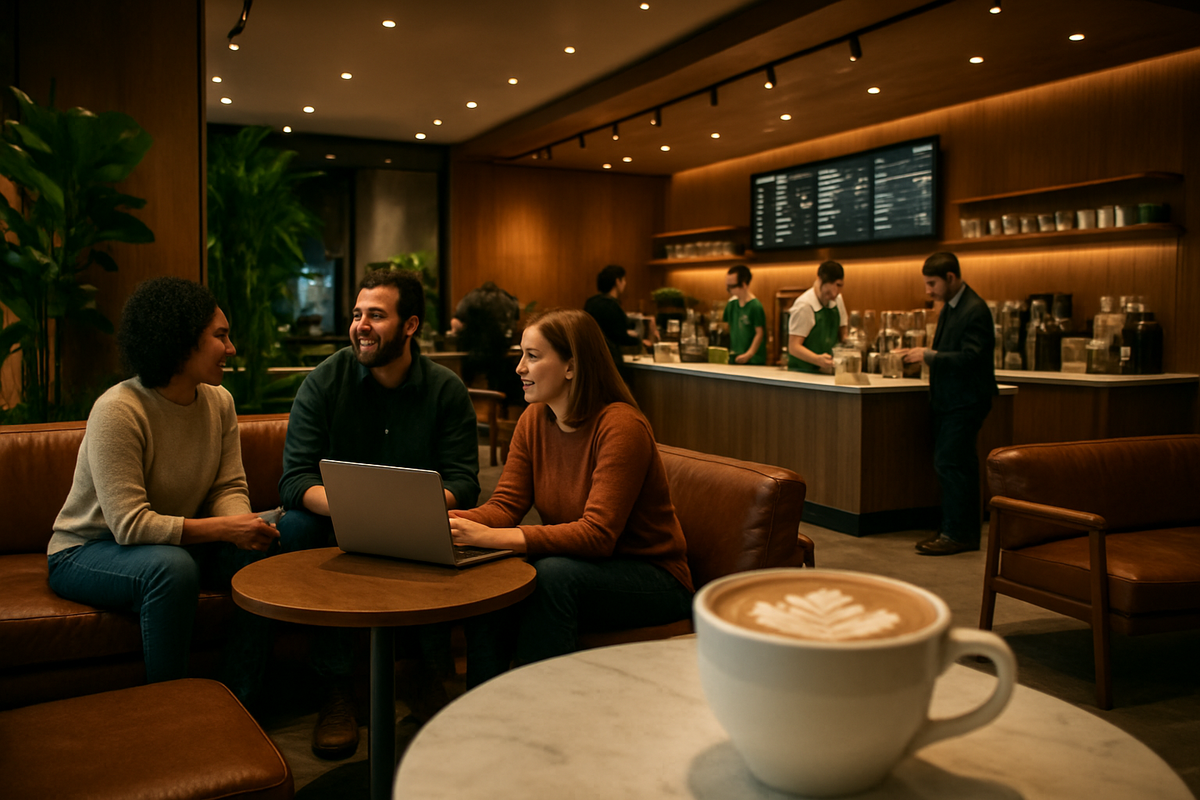
The Starbucks Q1 2026 results are a bellwether for the broader retail and hospitality industry, highlighting a shift away from the pandemic-era "grab-and-go" obsession back toward experiential retail. For years, the industry trend focused on mobile orders and drive-thrus. Starbucks' pivot back to the "Third Place" concept—comfortable seating, inviting atmosphere, and community feel—suggests that consumers are experiencing "digital fatigue" and are once again willing to pay a premium for a physical environment.
Historically, Starbucks has served as a proxy for the health of the global middle class. The 7% growth in China's comparable sales is particularly significant, as it suggests a stabilization in Chinese consumer spending after years of post-pandemic sluggishness. This event also mirrors historical precedents, such as Howard Schultz’s 2008 return to the company, where a focus on "core coffee values" helped pull the brand out of a similar identity crisis. The 2026 turnaround, however, faces a more complex regulatory environment, with ongoing labor union discussions and the potential for new tariffs impacting coffee bean imports.
Furthermore, the joint venture in China sets a potential precedent for other multinational corporations. As geopolitical tensions remain high, the "held for sale" accounting status of the China business allows Starbucks to insulate its balance sheet from regional shocks. This "localization strategy" may become the new blueprint for American brands operating in sensitive international markets, balancing brand presence with financial risk mitigation.
The Road Ahead: Scaling the Success
Looking forward, the short-term challenge for Starbucks will be managing the margin compression that accompanied the revenue beat. While the "Green Apron Service Model" has successfully boosted speed and traffic, it is currently expensive to maintain. Management will need to find ways to sustain these operational gains without permanently eroding operating margins, which in North America currently sit at roughly 10.1%, down from previous highs.
In the long term, the success of the 1,000-store remodel goal will be the ultimate litmus test for Brian Niccol’s tenure. If the "Third Place" strategy continues to drive 3-4% transaction growth, Starbucks could see a sustained re-rating of its stock. Additionally, the market will be watching the new digital initiatives under CTO Varadarajan. An overhaul of the mobile app and loyalty experience—aimed at reducing "app friction" that often clogs physical stores—could be the key to balancing the high-volume mobile business with the premium in-store experience.
Investors should also anticipate potential strategic pivots in the "at-home" segment. With competitors like Dutch Bros entering the pod and creamer market, Starbucks may feel pressured to innovate further in its CPG (Consumer Packaged Goods) division to defend its grocery store shelf space. The coming months will likely see a series of seasonal "experience-led" launches, similar to the "Bearista" cup drops, as the company leans into its brand power to drive loyalty.
Final Thoughts: A New Chapter for the Siren
The January 28, 2026, earnings report marks a definitive turning point for Starbucks. After a period of soul-searching and operational drift, the company has proven that it can still attract the masses when it focuses on its core strengths: quality coffee and a unique physical environment. The surge in stock price is a vote of confidence in Brian Niccol’s leadership and a recognition that the "Back to Starbucks" mantra is more than just a marketing slogan—it is a functional business roadmap.
Moving forward, the market will transition from watching "if" a turnaround is happening to "how" profitable that turnaround can be. The reinstatement of guidance is a massive win for transparency, but the miss on EPS serves as a reminder that the inflationary environment is far from over. Investors should remain focused on U.S. transaction trends and the execution of the China joint venture in the coming months.
Ultimately, the significance of this event lies in the resilience of the brand. Despite fierce competition and a shifting global economy, the Siren has shown she can still command a premium. For the first time in two years, the momentum is firmly in Starbucks' favor, setting the stage for what could be a banner year for the coffee giant.
This content is intended for informational purposes only and is not financial advice.