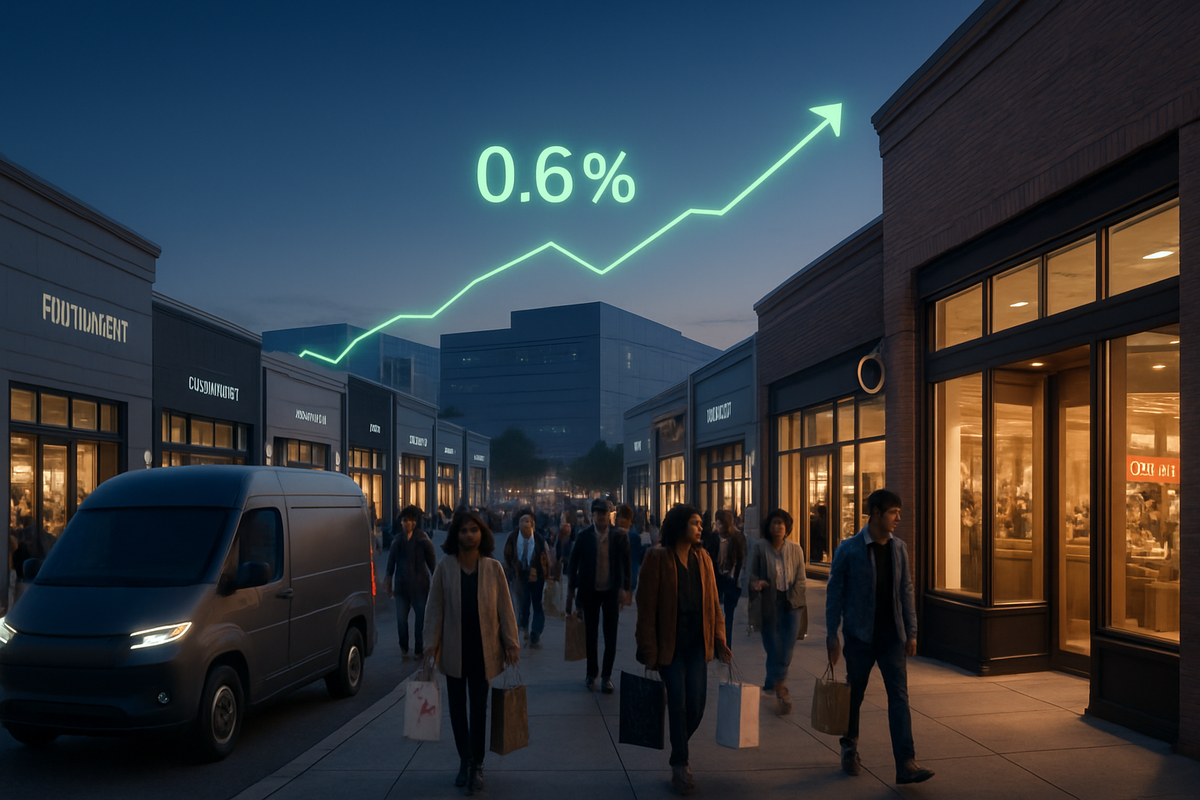
The U.S. economy entered 2026 on a surprisingly firm footing as newly released data for November 2025 showed retail sales jumped by 0.6%, comfortably outpacing the 0.4% growth forecasted by Wall Street economists. This unexpected surge, which came to light following a historic 43-day federal government shutdown that delayed official reporting until mid-January, suggests that the American consumer remains the economy’s most reliable engine of growth, even in the face of political volatility and persistent "sticky" inflation.
The implications of this "November Beat" are profound for the 2026 fiscal year. While analysts had feared a consumer pullback amid high interest rates and the exhaustion of pandemic-era savings, the data reveals a "coiled spring" effect where demand was released forcefully as federal operations resumed. This resilience has prompted major financial institutions to revise their 2026 GDP projections upward, though the strength of the consumer is creating a "higher-for-longer" headache for the Federal Reserve, which now faces a more complicated path toward interest rate cuts.
The Shutdown Delay and the "Coiled Spring" Recovery
The path to these results was anything but standard. The Commerce Department’s release on January 14, 2026, was the first official look at the holiday shopping season after the longest government shutdown in U.S. history left investors and policymakers in a data "blackout" for over six weeks. The 0.6% increase in November was led by a significant 1.0% rebound in motor vehicle purchases and a robust 1.9% jump in sporting goods and hobby stores. Perhaps most importantly, "core" retail sales—a metric that excludes volatile categories like gas and autos and feeds directly into GDP calculations—rose by 0.4%, indicating that fundamental household spending is far from collapsing.
Economists attribute this late-year strength to several factors, including a surge in "front-loading" by consumers who anticipated potential tariff increases scheduled for early 2026. Additionally, the resolution of the shutdown appears to have unleashed a wave of pent-up demand. The 0.6% gain followed a revised 0.1% contraction in October, suggesting that the political gridlock in Washington merely delayed, rather than destroyed, the holiday shopping spirit. The timeline of the rebound coincides with the passage of the "One Big Beautiful Bill" (OBBBA), a sweeping legislative package that boosted consumer confidence by clarifying tax refund schedules and introducing new credits for service industry workers.
Retail Fortresses vs. Discretionary Fragility: The Corporate Winners and Losers
The retail landscape of 2026 is increasingly becoming a tale of two markets. Walmart Inc. (NYSE: WMT) emerged as the undisputed titan of the season, with its stock hitting an all-time high of $118.52 this month. Walmart’s aggressive pivot toward AI-driven supply chain automation and its "flight to value" appeal have allowed it to capture market share from both struggling mid-tier retailers and price-sensitive grocery shoppers. Similarly, Amazon.com, Inc. (NASDAQ: AMZN) benefited from a 7.2% year-over-year surge in non-store retail sales, as its logistics dominance ensured delivery reliability during the post-shutdown shipping logjam.
However, the news was not universally positive. While Nike, Inc. (NYSE: NKE) and Dick’s Sporting Goods (NYSE: DKS) saw gains following the 1.9% sector jump in sporting goods, other discretionary giants are struggling. Target Corporation (NYSE: TGT) continues to face margin compression and a difficult leadership transition, with its shares seeing only a modest relief rally compared to its peers. The "K-shaped" nature of the recovery was further evidenced by the early 2026 bankruptcy filing of Saks Fifth Avenue, a stark warning that the mid-to-high discretionary luxury space is cracking even as discount and essential retail thrives. Big-ticket categories like furniture (-0.1%) also remain in the doldrums as consumers prioritize smaller, more affordable luxuries over major home investments.
Policy Pivots and the K-Shaped Consumer Reality
The broader significance of the November data lies in how it fits into the "K-shaped" economic narrative of the mid-2020s. While headline resilience is high, the bottom 80% of earners are increasingly relying on credit, with delinquency rates hitting 7.1%. For the Federal Reserve, the 0.6% retail beat is a double-edged sword. Fed officials have signaled that the "hot" consumer demand may require keeping the benchmark interest rate in the 3.50%–3.75% range for longer than previously anticipated. The market now expects a pause at the January 27–28 Fed meeting, with the first meaningful rate cuts likely pushed back to the second half of 2026.
Historically, such a delay in monetary easing would trigger a market sell-off. However, the 2026 outlook is being buoyed by fiscal tailwinds. The OBBBA legislation is expected to inject between $50 billion and $100 billion into the economy via tax refunds in the coming weeks. This fiscal injection is acting as a counterbalance to restrictive monetary policy, creating a unique "tug-of-war" between the Fed’s attempts to cool the economy and the government’s efforts to stimulate it. This environment mirrors the "Roaring 20s" style of growth, where high-income households (who now account for 57% of all spending) drive the headline numbers while lower-income households struggle with the cost of essentials.
Looking Ahead: The 2026 Spending Hangover?
As we move deeper into the first quarter of 2026, the primary question is whether this momentum is sustainable. Short-term risks include a "spending hangover" as consumers face record-high credit card balances and the expiration of "Buy Now, Pay Later" (BNPL) promotional periods. Retailers will need to pivot their strategies toward "affordability and automation" to survive a year where growth is expected to moderate. Goldman Sachs and J.P. Morgan currently project 2026 GDP growth between 2.2% and 2.5%, a healthy clip that nonetheless requires a delicate balance of consumer confidence and interest rate stability.
Market opportunities are likely to emerge in sectors that can capitalize on the new tax credits for service workers, such as casual dining and value-oriented travel. However, the threat of new tariffs in the second half of 2026 remains a wild card. If retailers are forced to pass on higher costs to an already stretched lower-income consumer, the "resilience" seen in November could evaporate quickly. Investors should watch for the Q1 earnings reports from major retailers in March, which will provide the first real evidence of whether the November surge was a temporary "front-loading" spike or a sustainable trend.
Summary and Investor Outlook
The 0.6% jump in November retail sales has rewritten the early 2026 economic narrative, proving that the American consumer can withstand significant political and inflationary pressure. While the data was delayed by a government shutdown, its strength has solidified the "soft landing" thesis, albeit one characterized by a widening gap between the wealthy and the working class. The market is moving forward with a renewed focus on "retail fortresses" like Walmart and Amazon, while keeping a wary eye on the Federal Reserve's next moves.
For investors, the key takeaways are clear: quality and value are king. The resilience of the consumer provides a buffer against a global slowdown, but the "higher-for-longer" interest rate environment means that companies with weak balance sheets or high exposure to middle-market discretionary spending are at risk. In the coming months, the focus will shift from the 2025 holiday season to the impact of the OBBBA tax refunds and the Fed’s June policy meeting. The U.S. consumer has won this round, but the fight to maintain that momentum through 2026 has only just begun.
This content is intended for informational purposes only and is not financial advice