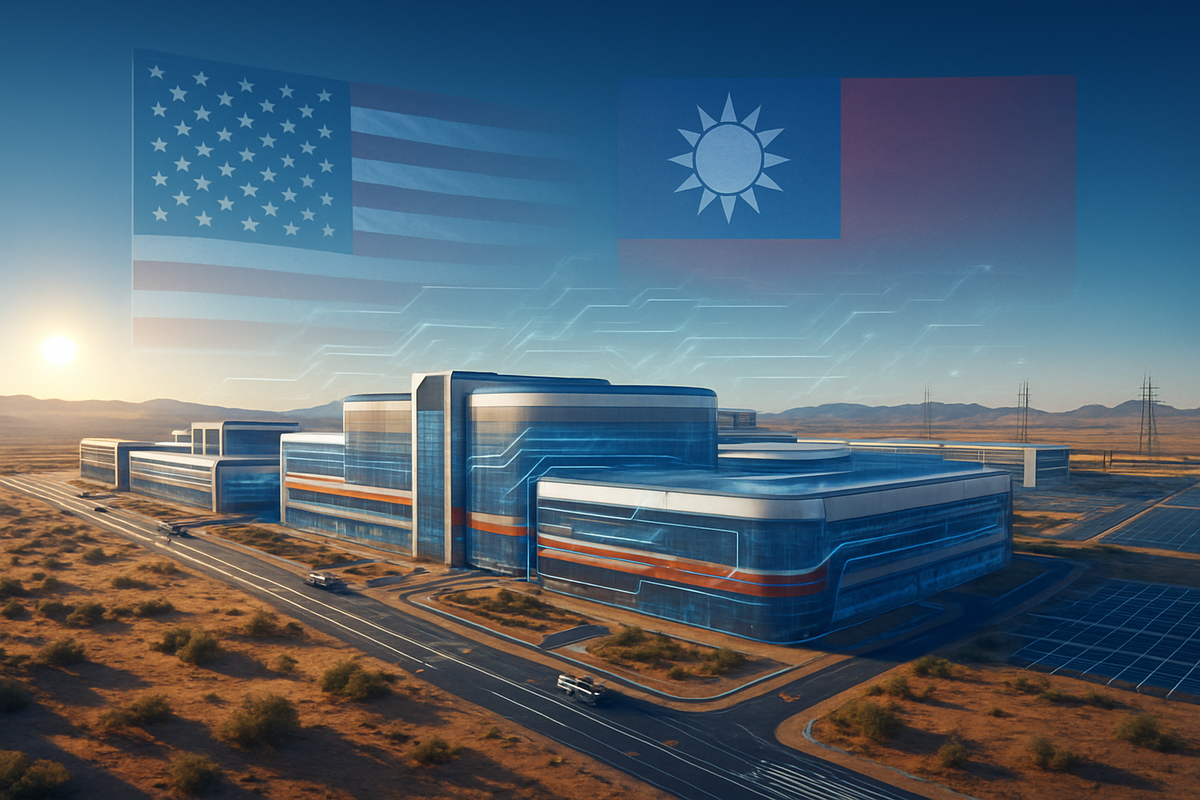
WASHINGTON, D.C. — In a monumental move that redraws the global map of high-tech manufacturing, the United States and Taiwan officially signed a landmark $500 billion semiconductor trade and investment agreement on January 15, 2026. This historic "Silicon Pact" is designed to aggressively reshore advanced chip production to American soil, aiming to secure the most critical supply chain in the modern world. The deal, which combines unprecedented corporate capital with government-backed credit guarantees, represents the largest single strategic industrial partnership in history, signaling a definitive shift in the geopolitical landscape of the technology sector.
The immediate implications of this agreement are profound. By incentivizing the relocation of the entire semiconductor ecosystem—from raw wafer manufacturing to advanced packaging—the deal aims to mitigate the "Silicon Shield" dilemma that has long kept the global economy hostage to potential conflicts in the Taiwan Strait. For the market, this move provides a clear roadmap for the next decade of growth in artificial intelligence, defense, and consumer electronics, while simultaneously reshaping trade relations between Washington and Taipei through significant tariff reductions.
The Architecture of the Deal: From Arizona Fabs to Tariff Reform
The $500 billion deal is structured as a dual-engine investment vehicle. At its core is a $250 billion commitment from Taiwanese technology giants, led by the Taiwan Semiconductor Manufacturing Company (NYSE: TSM). This capital is earmarked for the massive expansion of U.S.-based facilities, primarily the "Gigafab cluster" in Phoenix, Arizona. Complementing this is a $250 billion credit guarantee fund established by the Taiwanese government, specifically designed to help small and medium-sized suppliers—the vital "tier-two" ecosystem—finance their relocation and expansion into the United States.
This agreement follows years of escalating tensions and the realization that domestic chip security is synonymous with national security. The timeline leading to this moment began in earnest with the 2022 CHIPS Act, followed by what insiders call "CHIPS Act 2" in 2025, which introduced more aggressive "carrot and stick" trade policies. A key negotiator in this final deal, U.S. Commerce Secretary Howard Lutnick, successfully coupled the investment with a reduction in reciprocal tariffs on Taiwanese goods from 20% to 15%. This puts Taiwan on equal footing with major partners like Japan, effectively creating a "Free Trade Zone" for the semiconductor industry.
Industry reaction has been swift and overwhelmingly positive, albeit with a sense of gravity. The signing ceremony at the White House featured executives from the world’s leading tech firms, emphasizing that the "Gigafab" concept is no longer a pilot project but the new standard for global manufacturing. As of late 2025, TSMC’s first Arizona fab has already transitioned into high-volume production of 4nm chips, and this new funding is expected to fast-track the development of Fabs 3 and 4, which will target the cutting-edge 2nm and A16 nodes.
The Corporate Battlefield: Identifying the Winners and Losers
The primary victor in this deal is undoubtedly TSMC (NYSE: TSM). By securing massive U.S. government support and credit guarantees for its supply chain, the company solidifies its position as the world's indispensable foundry. The expansion into 10 to 11 fabs in Arizona ensures that TSMC will remain the primary manufacturer for the world’s most advanced AI chips, even as it diversifies its geographic footprint. However, the company faces the monumental task of managing a multi-continent workforce and navigating the "N-2" policy, which dictates that its absolute newest technology must debut in Taiwan two years before the U.S.
Nvidia (NASDAQ: NVDA) stands as a major beneficiary on the demand side. As a primary driver of the "Gigafab" demand, Nvidia is already mass-producing its Blackwell GPUs in Arizona. The $500 billion pact provides the long-term infrastructure stability Nvidia needs to satisfy the insatiable global demand for AI compute. Similarly, Apple (NASDAQ: AAPL) and other "fabless" firms gain a more resilient supply chain, reducing the "single-point-of-failure" risk associated with concentrated production in East Asia. Secondary winners include advanced packaging firms like Amkor Technology (NASDAQ: AMKR) and Foxconn—legally known as Hon Hai Precision Industry (OTC:HNHPF)—which are partnering to provide U.S.-based testing and system integration.
Conversely, the deal presents a complex challenge for Intel (NASDAQ: INTC). While Intel is a major beneficiary of the broader U.S. semiconductor policy, it now faces a direct, local threat as its greatest rival, TSMC, builds a massive, state-of-the-art manufacturing hub in its backyard. Intel must now accelerate its "Intel Foundry" services and prove that its High-NA EUV lithography can outcompete the efficiency of the TSMC ecosystem. Companies that rely heavily on older, mature nodes or those that have failed to diversify their manufacturing footprint may find themselves at a disadvantage as capital and talent migrate toward the new Arizona "Silicon Desert."
A New Era of Industrial Policy and National Security
The wider significance of this deal cannot be overstated. It marks the formal end of the "laissez-faire" approach to global supply chains, replacing it with a strategic, state-led industrial policy. This event fits into a broader trend of "friend-shoring," where economic alliances are built on shared security interests rather than just cost efficiency. By aiming to move 20% of advanced chip production to the U.S. by 2036, Washington is effectively building a "strategic reserve" of computing power that can withstand global geopolitical shocks.
The "carrot and stick" mechanism used in this pact—where firms building U.S. fabs can import chips tariff-free while those staying abroad face 100% tariffs—sets a new precedent for international trade. This policy creates a ripple effect, forcing competitors in Europe and South Korea to consider similar massive investment deals to maintain access to the American market. Historically, this is comparable to the 1986 U.S.-Japan Semiconductor Agreement, but on a much larger scale and with a focus on investment rather than just price floors.
The Road to 2036: Challenges and Strategic Pivots
Looking ahead, the short-term focus will be on the construction and staffing of the new Arizona Gigafabs. The industry will need to navigate a critical shortage of specialized labor, requiring a massive pivot in U.S. higher education and vocational training. The strategic pivot for many tech companies will involve redesigning their chips to take advantage of the specific capabilities of the new U.S.-based fabs as they come online in 2027 and 2028.
Market opportunities will emerge in the "periphery" of the semiconductor industry—construction, green energy (to power these massive plants), and specialized logistics. However, the potential for "over-incentivization" remains a risk. If the global demand for AI chips cools, the industry could face a glut of expensive, state-subsidized capacity. Furthermore, the 2036 target of 20% U.S.-based production is ambitious and relies on continued political stability and funding across multiple administrations.
Conclusion: A Turning Point for Global Markets
The $500 billion US-Taiwan semiconductor deal is a watershed moment that officially codifies the era of "Economic Security." It provides a clear signal to investors that the U.S. government is committed to reclaiming its status as a manufacturing powerhouse, albeit through a deep partnership with Taiwanese expertise. The key takeaway is the unprecedented scale of the commitment; $500 billion is no longer just a subsidy—it is a total restructuring of the world’s most important industry.
Moving forward, the market will likely reward companies that can successfully bridge the gap between Taiwanese innovation and American manufacturing. Investors should keep a close eye on the construction milestones in Arizona and the quarterly reports of the "ecosystem" companies like Amkor and Foxconn. While the geopolitical risks have not vanished, the foundation for a more resilient, decentralized, and technologically advanced future has been laid. The coming months will be a test of execution, as the world watches to see if the "Silicon Desert" can truly become the new capital of the digital age.
This content is intended for informational purposes only and is not financial advice.