As of February 19, 2026, Rio Tinto (NYSE: RIO; ASX: RIO; LSE: RIO) stands at a historic crossroads. Long synonymous with the vast iron ore pits of Western Australia’s Pilbara region, the world’s second-largest miner is mid-way through a radical portfolio reconstruction. Driven by the global mandate for decarbonization, Rio Tinto has spent the last two years aggressively pivoting toward "energy transition metals"—copper, aluminum, and lithium.
Under the new leadership of CEO Simon Trott, who took the helm in May 2025, the company is attempting to balance its traditional role as the "cash cow" of the iron ore markets with a new identity as a critical supplier to the global EV and renewable energy supply chains. With the recent integration of the $6.7 billion Arcadium Lithium acquisition and the first shipments finally leaving the Simandou project in Guinea, Rio Tinto is arguably the most watched commodity play of 2026.
Historical Background
Founded in 1873 when a British-European syndicate purchased the ancient Rio Tinto copper mines in Spain, the company has evolved through over 150 years of mergers and geographic expansion. The most defining moment in its modern history was the 2007 acquisition of Alcan for $38 billion, which made Rio a global leader in aluminum but burdened it with debt for years.
Throughout the 2010s, Rio Tinto refined its focus on "tier-one" assets—large-scale, low-cost, long-life mines. However, the company’s reputation faced a severe crisis in 2020 following the destruction of the Juukan Gorge rock shelters, a 46,000-year-old Indigenous site. This event led to a complete overhaul of the executive suite and a fundamental shift in how the company approaches environmental, social, and governance (ESG) factors, setting the stage for the transparent, transition-focused entity it is today.
Business Model
Rio Tinto operates as a dual-listed company (DLC) with a diversified revenue base concentrated across four primary segments:
- Iron Ore: The engine of the company, representing approximately 60-70% of EBITDA. Rio Tinto’s Pilbara operations are among the most efficient in the world, producing high-grade ore with industry-leading margins.
- Aluminum: A vertically integrated business spanning bauxite mining, alumina refining, and aluminum smelting. Rio’s competitive advantage lies in its access to low-carbon hydropower for its Canadian smelters.
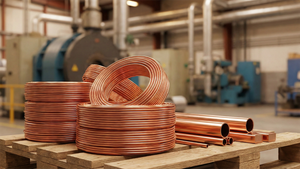
- Copper: Focused on major assets like Kennecott (USA) and the recently expanded Oyu Tolgoi (Mongolia). Copper is the company’s primary growth lever.
- Minerals & Lithium: This segment includes borates, titanium dioxide, and the newly acquired lithium assets from Arcadium. Following the 2025 merger, Rio is now the world’s third-largest lithium producer.
Stock Performance Overview
Over the past decade, Rio Tinto has been a premier "dividend play" for value investors, though capital appreciation has been highly cyclical.
- 1-Year Performance (2025–2026): RIO shares saw a 34% recovery in 2025, fueled by a surge in copper and aluminum prices and the market’s positive reception to the Arcadium acquisition.
- 5-Year Performance (2021–2026): The stock has outperformed the broader S&P 500 Materials index, largely due to its high dividend payout ratio, which has averaged 60% of underlying earnings.
- 10-Year Performance: Looking back to 2016, the stock has nearly tripled in value (excluding dividends), reflecting the "super-cycle" in iron ore and the successful deleveraging of the balance sheet post-2015 commodity crash.
Financial Performance
In its most recent full-year results reported in February 2026, Rio Tinto demonstrated operational resilience despite a volatile macro backdrop.
- Underlying EBITDA: $25.4 billion, a 9% year-on-year increase, driven by an 8% rise in copper-equivalent production.
- Net Profit: $10.0 billion, down slightly from $11.6 billion in 2024. The decline was attributed to a softening iron ore price environment and higher depreciation charges from the ramp-up of the Oyu Tolgoi underground mine.
- Balance Sheet: Net debt rose to $14.4 billion by early 2026, up from $5.5 billion a year prior. This spike was expected, reflecting the $6.7 billion cash outflow for Arcadium Lithium and heavy capital expenditure on the Simandou project.
- Valuation: Trading at a forward P/E ratio of approximately 10.5x, Rio remains attractively valued compared to its 10-year historical average of 12.8x.
Leadership and Management
In May 2025, Simon Trott succeeded Jakob Stausholm as CEO. Trott, a Rio Tinto veteran, has introduced a "Stronger, Sharper, Simpler" strategy aimed at streamlining the company’s vast portfolio. While Stausholm was credited with repairing the company’s culture and ESG standing, Trott is seen as a "growth CEO" focused on operational execution and M&A integration.
The Board, chaired by Dominic Barton, remains focused on "social license to operate," ensuring that the aggressive growth in Guinea and Mongolia does not repeat the mistakes of the past.
Products, Services, and Innovations
Innovation at Rio Tinto is currently focused on two fronts: automation and decarbonization.
- AutoHaul: Rio continues to lead the industry in autonomous rail and haulage, reducing operational costs in the Pilbara.
- ELYSIS: A joint venture with Alcoa, ELYSIS aims to commercialize a carbon-free aluminum smelting process. In 2026, the first commercial-scale cells are beginning to be deployed, offering a "green premium" product for the aerospace and automotive sectors.
- Rincon Lithium: Rio is utilizing Direct Lithium Extraction (DLE) technology at its Rincon project in Argentina, a move that significantly reduces water usage and processing time compared to traditional evaporation ponds.
Competitive Landscape
Rio Tinto competes with a handful of global "super-majors."
- BHP (NYSE: BHP): Rio’s primary rival in iron ore and copper. While BHP is larger by market cap, Rio holds a slight edge in aluminum integration.
- Vale (NYSE: VALE): Vale recently reclaimed the title of the world's largest iron ore producer in 2025, though Rio Tinto’s Pilbara assets remain more cost-efficient.
- Fortescue (ASX: FMG): A fierce competitor in iron ore that is also pivoting toward green hydrogen, though Rio’s broader diversification into copper and lithium gives it a more balanced risk profile.
Industry and Market Trends
The "Green Transition" is the primary driver of the sector in 2026. Global demand for copper is projected to grow by 3-4% annually through 2030, while lithium demand remains high despite a period of price volatility in 2024.
Crucially, the "China Factor" is shifting. While China’s property sector—the traditional driver of iron ore demand—remains in a structural decline, its leadership in EV manufacturing and solar energy is keeping aluminum and copper demand robust. Rio Tinto is effectively using these "new economy" metals to hedge against the "old economy" slowdown.
Risks and Challenges
- Geopolitical Risk (Simandou): The Simandou project in Guinea is a massive undertaking involving the Guinean government and Chinese partners. Political instability in West Africa remains a persistent risk to production timelines.
- Commodity Volatility: If iron ore prices drop below $80/tonne due to oversupply or a deeper-than-expected Chinese recession, Rio’s dividend-paying capacity could be pressured.
- Operational Safety: Following several safety incidents in late 2024, the company is under intense regulatory scrutiny to prove its "Safe Production System" is effective.
Opportunities and Catalysts
- Simandou Ramp-up: With first shipments in Dec 2025, the 2026 target of 5–10 million tonnes is just the beginning. At full capacity (60 Mtpa for Rio’s share), it will be a significant earnings driver.
- Oyu Tolgoi: The Mongolian copper mine is on track to become the world’s fourth-largest by 2028. Every 10% increase in copper prices adds significantly to Rio's bottom line.
- Portfolio Pruning: CEO Simon Trott has identified $5–10 billion in non-core assets (borates, titanium dioxide) for potential sale in 2026, which could provide the cash for a special dividend or further lithium acquisitions.
Investor Sentiment and Analyst Coverage
Wall Street maintains a "Moderate Buy" consensus on RIO. Analysts at Goldman Sachs and J.P. Morgan have praised the Arcadium acquisition as a "timely entry" into the lithium market. Institutional sentiment is currently buoyed by the company’s 60% dividend payout policy, making it a staple for income-focused funds. Retail sentiment remains cautious regarding the Guinea project but optimistic about the copper growth story.
Regulatory, Policy, and Geopolitical Factors
As a global miner, Rio is heavily impacted by trade policy. The ongoing "Resource Nationalism" trend in South America and Africa has forced Rio to adopt more collaborative partnership models (as seen in the Simandou JV). Furthermore, Australia’s evolving carbon pricing mechanisms are pushing the company to accelerate its $7.5 billion decarbonization spend, which could impact short-term margins but ensures long-term "social license" and compliance.
Conclusion
Rio Tinto in 2026 is a company successfully navigating a massive structural shift. By securing a top-tier position in lithium and expanding its copper footprint via Oyu Tolgoi, Rio has effectively de-risked its future from a pure-play iron ore bet to a diversified energy transition powerhouse.
While the increased debt load and the execution risks in Guinea and Mongolia warrant a cautious eye, the company’s high-quality assets and disciplined capital allocation make it a formidable player. For investors, the "new Rio" offers a rare combination: a high-yield income stream today, backed by a portfolio built for the technologies of 2030.
This content is intended for informational purposes only and is not financial advice.